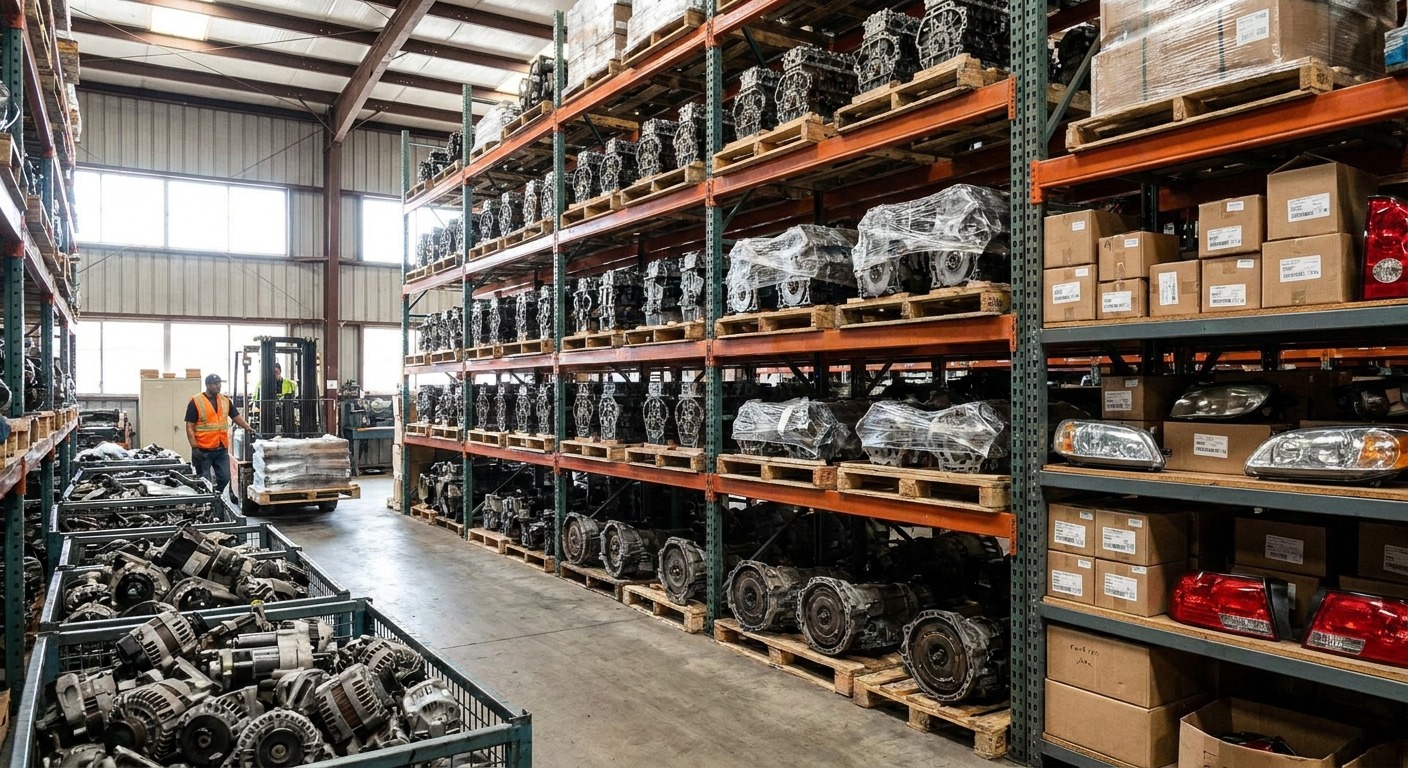
The average Canadian household spends over $1,400 per year on vehicle maintenance and repair. That number would be dramatically higher without a supply chain that most people never think about: the auto salvage industry. Salvage yards are the wholesale backbone of affordable repair in this country, and their influence on pricing extends far beyond the individual parts they sell.
When policy discussions turn to auto wrecking — usually in the context of zoning fights or environmental hand-wringing — the cost dimension is almost never mentioned. It should be. The salvage parts supply chain is a price anchor for the entire automotive repair market, and weakening it would hurt the people who can least afford it.
The Pricing Ecosystem: How Salvage Creates a Ceiling
Repair costs are determined by two factors: parts and labour. Labour rates are largely fixed by local market conditions — a mechanic's hourly rate is what it is. Parts pricing, however, is where the real variation happens, and where salvage exerts its strongest influence.
When a new OEM part is priced at $800 and a tested salvage OEM part is available at $250, the salvage price creates a competitive ceiling that disciplines the entire market. Aftermarket manufacturers price their alternatives with an eye on salvage availability. Insurance estimators factor salvage into repair-or-replace calculations. Even dealerships occasionally adjust parts pricing in markets where salvage supply is particularly strong.
That 20–40% estimate comes from examining the price differential on the most commonly replaced components — body panels, lighting assemblies, drivetrain components, and electronic modules — and modelling what repair invoices would look like if every part had to be sourced new. The low end of the range assumes aftermarket parts fill some of the gap. The high end reflects the reality that for many components, particularly for vehicles over 8 years old, there is no aftermarket option and the choice is salvage or dealer-new.
Who Gets Hurt When Parts Cost More
Rising repair costs do not affect everyone equally. The Canadians who depend most on affordable repair are exactly the ones least able to absorb price increases:
- Rural drivers with no public transit alternative and long commutes on rough roads that accelerate wear
- Lower-income households maintaining older vehicles because new car payments are out of reach
- Small business operators — tradespeople, delivery drivers, mobile service providers — whose vehicles are income-producing tools
- Older Canadians on fixed incomes who keep vehicles running as long as possible
A vehicle is not a luxury for most Canadians. Outside of a handful of urban cores with adequate transit, it is a necessity for employment, healthcare access, and basic daily life. When repair costs spike, the consequences ripple: people defer maintenance (creating safety hazards), take on debt for repairs, or scrap functional vehicles prematurely because a single component failure becomes unaffordable to fix.
The salvage industry prevents a significant portion of that pain, and it does so through market mechanics rather than government programs.
Independent Shops vs the Dealer Monopoly
Canada has roughly 25,000 independent repair shops competing with roughly 3,500 franchised new-car dealerships that also operate service departments. The independents collectively handle the majority of out-of-warranty repair work, and their ability to do so at competitive rates is directly tied to parts sourcing.
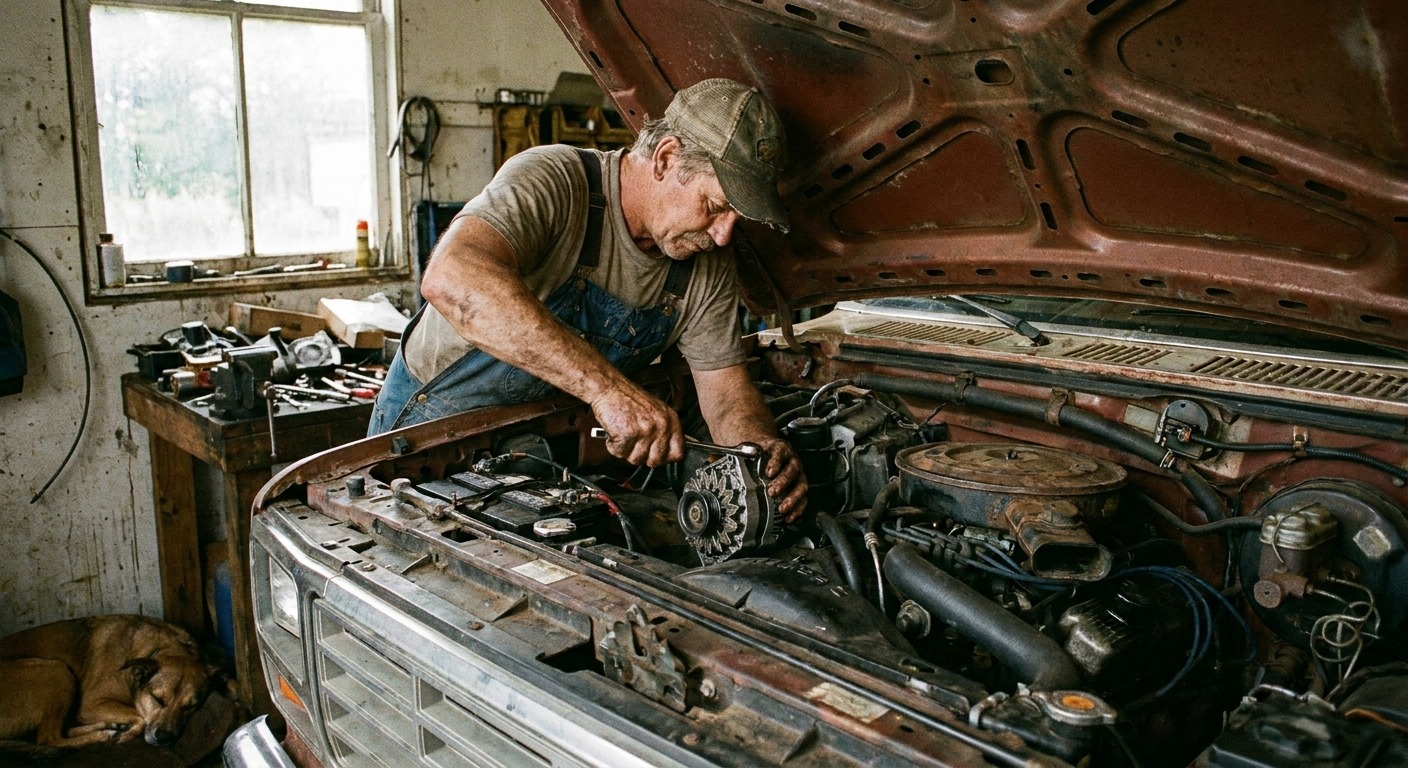
Dealership service departments have a structural advantage: wholesale access to new OEM parts through their manufacturer relationship. An independent shop buying the same part at the dealer's retail counter pays 30–50% more. Without an alternative parts source, independent shops cannot compete on total repair cost — and the consumer loses the ability to shop around.
"Take away my access to salvage parts and I'm done within a year. I can't compete with the dealer on labour rates — I'm already cheaper there. I compete on parts cost. That's the whole game." — Independent shop owner, southern Ontario
Salvage parts level the playing field. When an independent shop can source a tested OEM alternator for 40% of dealer price, they can offer a total repair cost that beats the dealership and still maintain a viable margin. Multiply that across thousands of repairs per year across thousands of shops and you begin to see the scale of the competitive effect.
The Insurance Premium Connection
Insurance companies are deeply invested in repair costs because they pay the majority of collision repair bills in Canada. The relationship between parts cost and premiums is not theoretical — it is calculated into every rate filing.
When an insurer estimates a repair, they frequently specify salvage or aftermarket parts rather than new OEM. This is not arbitrary cheapness; it is cost management that directly affects what policyholders pay. The Insurance Bureau of Canada has noted repeatedly that parts cost inflation is a primary driver of premium increases.
| Parts Source | Average Cost Index | Effect on Claim Cost |
|---|---|---|
| New OEM (Dealer) | 100 (baseline) | Highest claim cost, highest premium pressure |
| Aftermarket | 55–75 | Moderate savings, variable quality risk |
| Salvage OEM | 30–50 | Lowest cost, OEM quality, strongest premium relief |
If salvage parts were unavailable, insurers would have two options: absorb higher repair costs (reducing profitability and eventually raising premiums) or total-loss more vehicles rather than repair them. Both outcomes are worse for consumers. Higher premiums are an obvious cost. More total losses mean more people losing their vehicles and facing replacement costs, which is particularly brutal at the lower end of the market where a $6,000 car is the only option.
The roughly 500,000 vehicles written off annually already represent the margin between repair and replace. Push repair costs up by eliminating salvage supply, and that number grows — taking more affordable vehicles off the road permanently.
Right to Repair: The Parts Dimension
The right-to-repair movement in Canada has focused heavily on diagnostic software access and manufacturer data, and rightly so. But there is a parts dimension that gets less attention: the ability to source components outside the manufacturer's authorized supply chain.
Several automakers have taken steps to restrict parts availability:
- Design patents on body panels and lighting that block aftermarket production (particularly common with European manufacturers)
- Electronic parts pairing that requires dealer-level software to activate a replacement component — even a used OEM one
- Restricted access to calibration tools needed after certain part replacements (ADAS cameras, radar modules)
- Pressure on insurers to mandate new OEM parts through certified repair network agreements
Every one of these moves, if successful at scale, would reduce the viability of both salvage and aftermarket parts — concentrating repair spending at dealerships and raising costs for everyone. The salvage industry is a natural ally of right-to-repair advocates because its entire business model depends on parts remaining interchangeable and accessible.
The Environmental Bonus
Cost savings from salvage parts are not separate from environmental benefits — they are the same thing viewed from a different angle. Every salvage part installed is a part that did not need to be manufactured. The carbon math of auto recycling shows that parts reuse is one of the highest-value environmental activities in the entire automotive lifecycle.
Manufacturing a new alternator requires mining raw materials, refining metals, operating a factory, and shipping the finished product — often across oceans. A salvage alternator requires removing it from a vehicle, testing it, and driving it across town. The energy differential is orders of magnitude.
This is the part of the auto recycling story that should make environmentalists into industry advocates rather than opponents. The same yards that municipalities fight to zone out of existence are providing one of the most tangible, measurable environmental services in the local economy. The cost savings and the environmental savings are not in tension — they are identical.
What Weakening Salvage Supply Would Mean
Consider a Canada where the salvage parts supply chain is significantly diminished — through restrictive zoning that closes yards, through manufacturer parts-pairing that locks out used components, or through well-meaning but poorly designed environmental regulations that make yard operations uneconomic.
The consequences cascade:
- Average repair costs rise 20–40%, hitting lower-income and rural Canadians hardest
- Independent repair shops lose their primary competitive advantage, accelerating consolidation toward dealer service monopolies
- Insurance premiums increase as claim costs rise
- More vehicles are written off rather than repaired, shrinking the affordable used vehicle supply
- Hundreds of thousands of tonnes of reusable components get shredded for scrap value instead of serving their full useful life
- Manufacturing emissions increase as demand shifts to new parts production
None of this is speculative. These are direct, predictable consequences of reducing salvage supply in a market that currently depends on it. Anyone advocating policies that restrict auto recycling operations needs to account for these costs — not just the aesthetic or perceived environmental costs of having a yard in the neighbourhood.
The regulatory framework that governs this industry exists for good reasons, and responsible operators comply with it. The argument for salvage is not an argument against regulation. It is an argument for understanding what the industry actually does — and what Canada would lose without it.