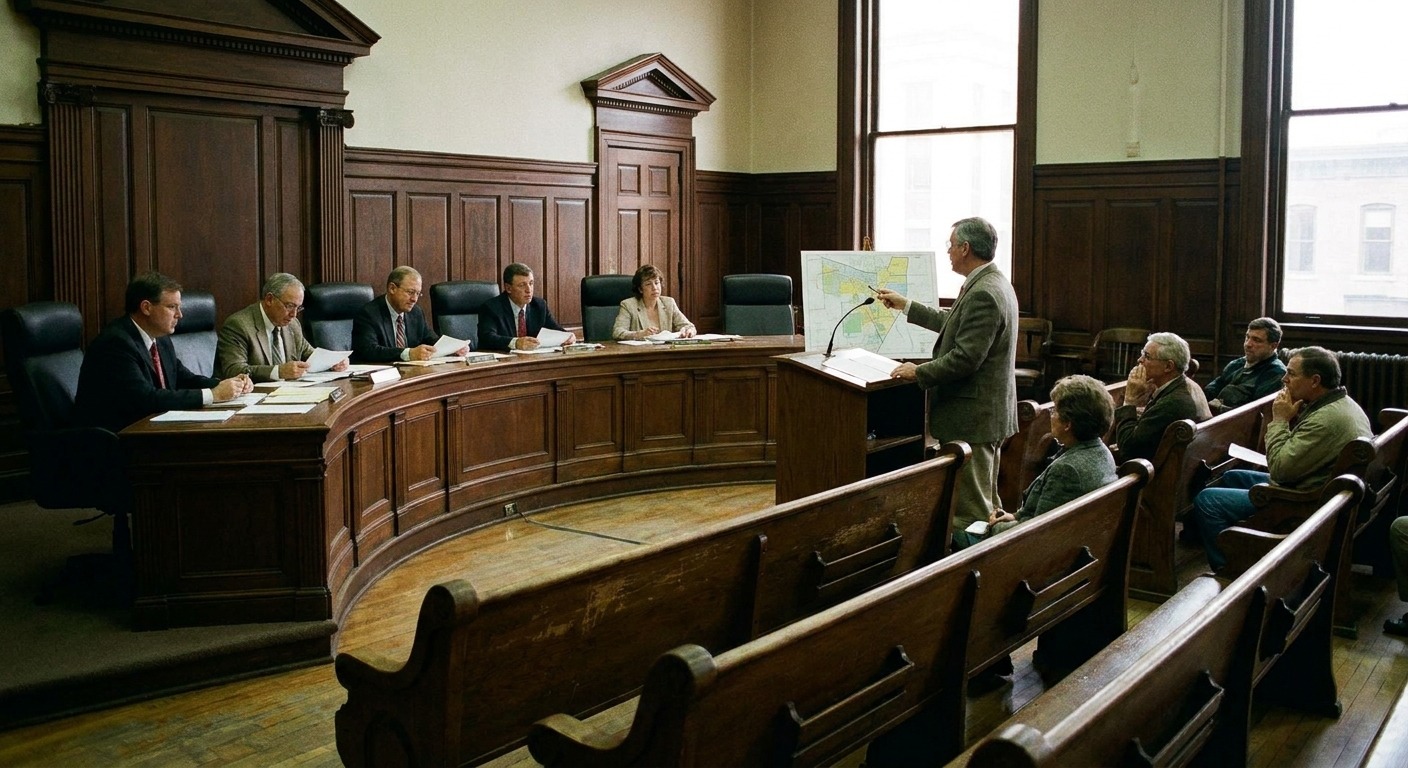
Here is the central contradiction of Canadian recycling policy: everyone wants recycling to happen, and almost nobody wants it to happen near them. We have built an entire cultural framework around the idea that recycling is clean, virtuous, and invisible — something that happens after you put the bin at the curb, somewhere else, handled by someone you never have to see. The moment recycling becomes visible, industrial, and physically present in a community, the support evaporates. This is the NIMBY problem, and it affects every sector of the recycling industry that does actual material recovery.
Recycling Is Manufacturing
The public imagination places recycling somewhere between charity work and gardening — a gentle, green activity that requires good intentions and a sorting chart on the fridge. In reality, recycling is manufacturing. It involves heavy machinery, energy-intensive processing, chemical handling, and industrial-scale logistics. Turning scrap steel into new steel requires electric arc furnaces running at 1,800°C. Turning used motor oil into re-refined base oil requires vacuum distillation and hydrotreating. Turning a wrecked car into recovered materials requires hydraulic shears, fluid extraction systems, car crushers, and industrial shredders.
This is factory work. It looks like factory work. It sounds like factory work. And the public, broadly speaking, does not want factories near their homes — even factories that perform the environmental services they claim to support.
1,800°C — operating temperature of an electric arc furnace used to recycle scrap steel. Real recycling is heavy industry, not a craft project.
Who Gets the Opposition
The NIMBY dynamic is not evenly distributed. Some recycling-related facilities face intense opposition; others operate with minimal public awareness. The pattern is revealing.
- Low opposition
- Bottle depots, municipal recycling drop-off centres, charity clothing bins. These are small-scale, quiet, and aesthetically neutral. They are the face of recycling that the public accepts.
- Moderate opposition
- Material Recovery Facilities (MRFs), composting operations. These generate some truck traffic and occasional odour complaints, but they are usually housed in industrial buildings and attract limited attention.
- High opposition
- Auto recyclers, scrap metal processors, e-waste dismantlers, tire recyclers. These are the operations that do the bulk of material recovery by tonnage, and they are the ones that face zoning fights, petition campaigns, and council opposition.
The operations with the highest recovery rates — the ones diverting the most material from landfill — are the ones facing the most resistance. That is not a coincidence. It is a direct consequence of the gap between what recycling looks like in the public mind and what recycling looks like in practice.
The Auto Wrecker as Case Study
Auto wrecking yards are the perfect example of this dynamic. A modern Canadian salvage yard recovers 80 to 85 percent of every vehicle it processes. It captures hazardous fluids before they can contaminate soil or water. It feeds recovered steel into a domestic supply chain that displaces virgin mining. It reuses thousands of parts per year, reducing manufacturing demand and keeping repair costs down for consumers.
By any rational environmental metric, this is an operation that should be welcomed and supported. Instead, it faces opposition rooted in aesthetics and stigma. Stacked cars are unsightly. Equipment noise is industrial. The yard takes up acreage. In the minds of many residents and municipal planners, it belongs somewhere else — always somewhere else.
The same residents who oppose a wrecking yard will drive past a gas station, a dry cleaner, and an auto body shop without blinking. All three handle hazardous materials. The gas station stores thousands of litres of fuel underground. The dry cleaner uses perchloroethylene, a known carcinogen. The body shop sprays volatile organic compounds in its paint booth. But these businesses are familiar, small-footprint, and embedded in the commercial landscape. They are invisible in the way the wrecking yard is not.
The Industrial Ecology Nobody Wants to See
The broader recycling ecosystem faces the same problem. Scrap metal processors — the facilities that accept shredded vehicles and industrial scrap, sort ferrous from non-ferrous metals, and ship them to foundries and mills — operate in an environment of permanent political precariousness. They are loud, they are large, and they are essential to the steel recycling chain that keeps millions of tonnes of material out of landfills annually.
E-waste recyclers dismantle old electronics to recover precious metals, copper, and rare earth elements. The work involves specialized handling of hazardous materials — lead solder, mercury switches, cadmium batteries. It is technical, necessary, and entirely unwelcome in most communities.
Tire recyclers process the 30 million or more tires that reach end of life in Canada each year, turning them into crumb rubber, fuel, and carbon black. The process requires industrial equipment and generates emissions that must be managed. Communities that generate the tires are rarely willing to host the facilities that process them.
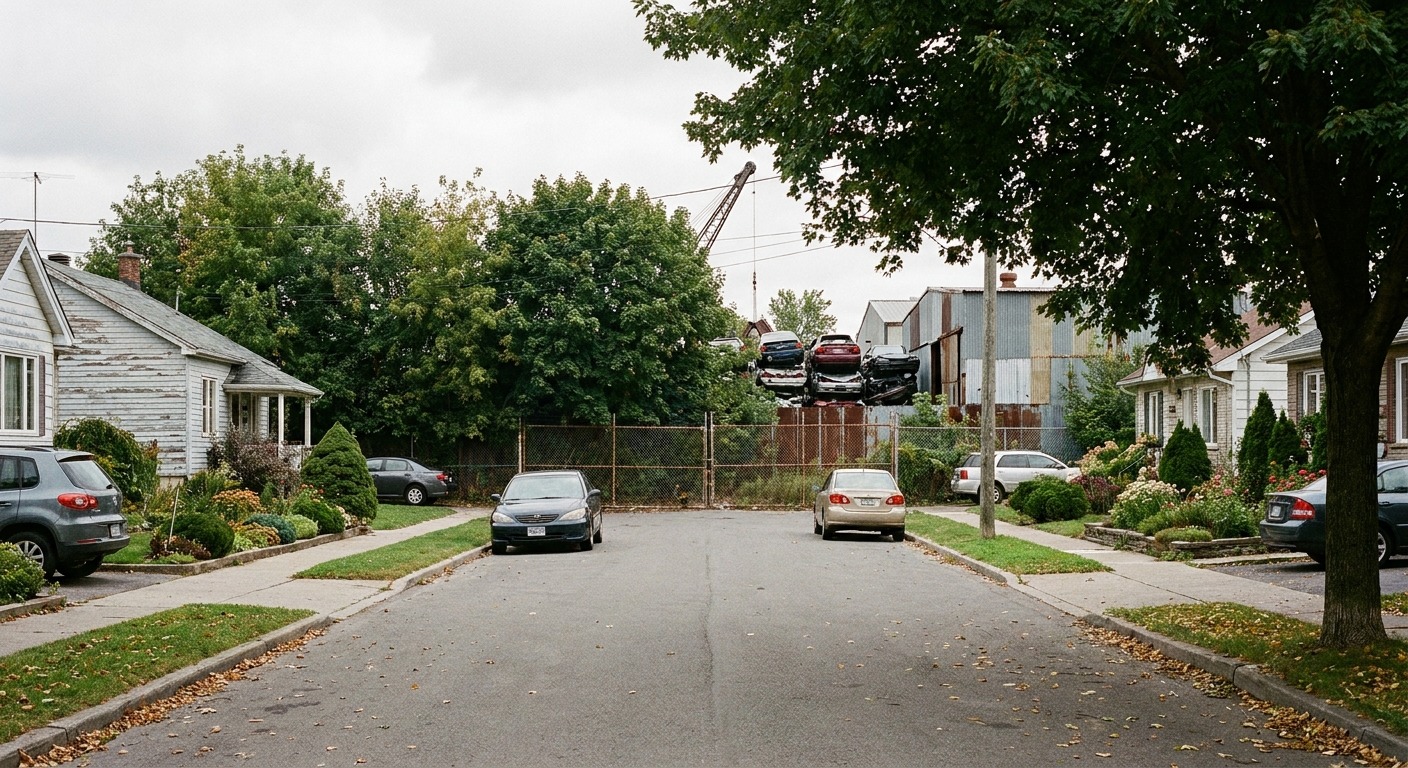
In every case, the pattern is the same: the communities that consume the products are unwilling to host the facilities that recycle them. The environmental burden is pushed outward — to industrial zones, rural municipalities, or developing countries.
The Invisible Recycling Fantasy
What the public wants is recycling that is clean, quiet, and invisible. Put the blue bin out. It disappears. Somewhere, somehow, everything is reborn as new products. No trucks, no noise, no heavy equipment, no fluid handling, no unsightly yards. This fantasy is comforting. It is also physically impossible.
Material recovery requires energy, equipment, space, and labour. The heavier and more complex the material stream, the more intensive the process. A car contains steel, aluminum, copper, zinc, lead, rubber, glass, plastic, textiles, and a half-dozen different fluids. Recovering those materials is not a clean-room operation. It is messy, loud, and industrial — because it has to be.
The alternative to industrial recycling is not clean recycling. The alternative is no recycling — material sent to landfill, or exported to countries where the processing happens out of sight and under less regulation. That is the actual choice that NIMBY opposition forces.
The NIMBY dynamic has a geographic dimension that compounds its effects. Urban and suburban communities — which generate the largest volumes of waste — are the most aggressive in rejecting recycling facilities. The operations get pushed to rural and semi-rural areas, where land is cheaper, zoning is more permissive, and political resistance is weaker.
This creates a pattern where affluent suburban communities export their recycling burden to less wealthy rural areas while congratulating themselves on their diversion rates. The auto recycler in a rural Ontario township is processing vehicles from across the Greater Toronto Area, but the GTA municipality that generated those vehicles fought to keep the yard out of its own borders.
The environmental justice angle is not subtle. The communities that bear the costs of recycling — the noise, the truck traffic, the visual impact — are not the communities that generate the waste. And the communities that generate the waste are the most vocal about their environmental credentials.
What Would Rational Siting Policy Look Like?
A society that took recycling seriously would treat recycling infrastructure the way it treats other essential services — as something every community has a responsibility to accommodate. We do not let municipalities opt out of hosting water treatment plants or electricity substations. We recognize those as necessary infrastructure. Recycling facilities should be viewed the same way.
Specifically, this would mean:
- Mandatory zoning allocations. Municipalities above a certain population threshold should be required to zone adequate land for recycling and material recovery operations, including auto recycling.
- Performance-based regulation. Evaluate facilities on environmental performance — emissions, spill records, recovery rates — not on aesthetic objections or proximity-based fears.
- Public education that is honest. Stop telling people recycling is a blue bin on the curb. Start telling them it is an industrial process that requires industrial facilities, and that those facilities need to exist somewhere.
- Recognition of existing operators. Auto recyclers, scrap processors, and other material recovery operations that meet regulatory standards should be treated as environmental assets, not nuisances.
"They love recycling right up until they can see it happening. Then it's a zoning problem." — Auto recycler, Alberta, third-generation family operation
The Cost of Cognitive Dissonance
The NIMBY problem is not just a planning issue. It has direct environmental consequences. When recycling facilities are blocked, restricted, or pushed to suboptimal locations, recycling rates suffer. Material that could be recovered locally gets shipped longer distances, at greater cost and with higher transport emissions. Operations that would invest in better technology and larger capacity cannot do so because they cannot secure the approvals to expand.
The Automotive Recyclers of Canada estimates the industry processes roughly 1.6 million vehicles per year. That is over a million tonnes of steel, hundreds of thousands of parts reused, and millions of litres of fluids captured. Every zoning denial, every delayed approval, every municipal opposition campaign that prevents an auto recycler from operating makes that number smaller and sends more material to landfill.
The public wants recycling without the reality of recycling. That is the NIMBY problem in one sentence. Until communities are willing to accept that real material recovery is an industrial process that must happen somewhere, the gap between recycling rhetoric and recycling results will persist. Auto wreckers have been doing the real work for decades. It is past time they were recognized for it instead of punished.