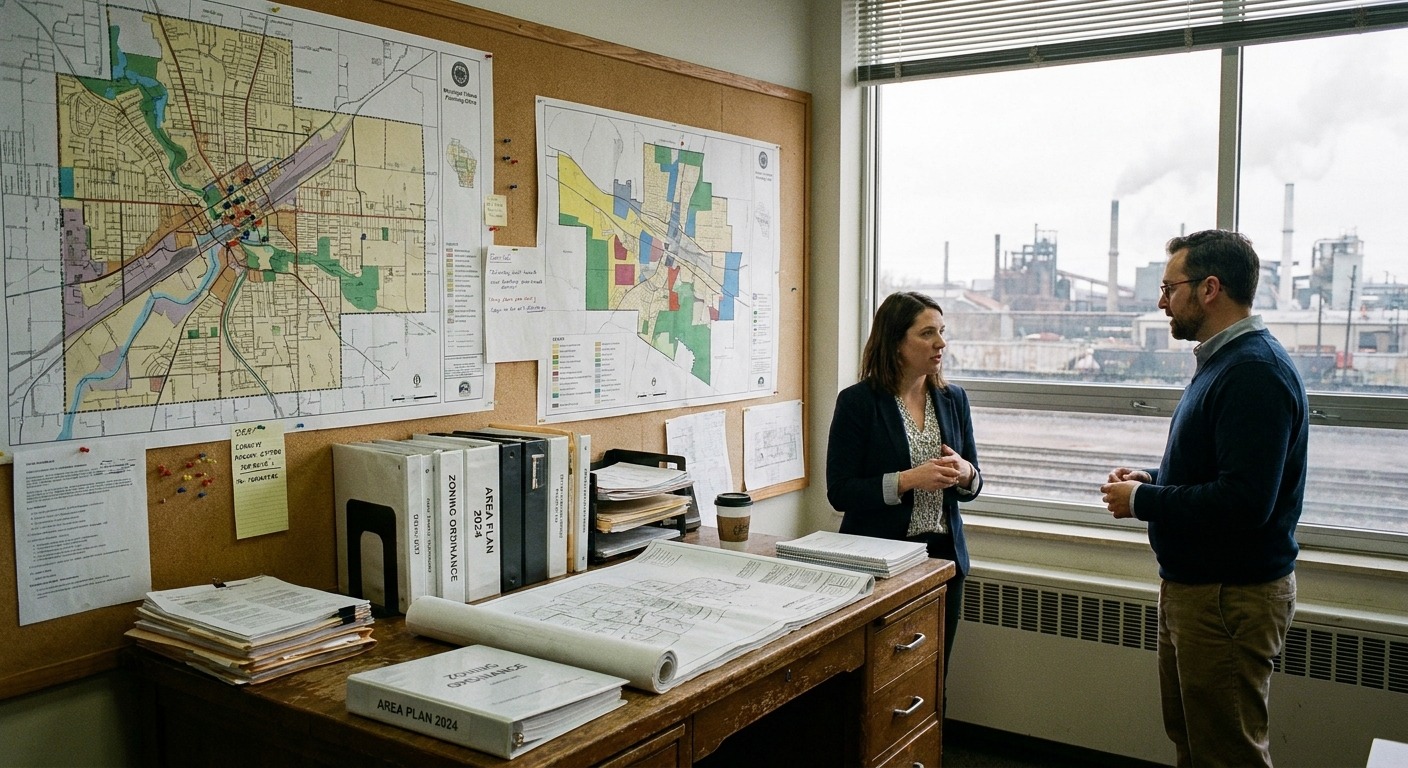
If you want to open an auto recycling operation in most Canadian municipalities, prepare for a fight. Not because the environmental regulations are impossible — they are strict, but navigable for competent operators. The fight is with the municipality itself. Councils, planning departments, and residents' groups will line up to oppose the application, armed with concerns about visual impact, property values, noise, and vague environmental fears. The irony is thick enough to crush a car: many of these same municipalities run curbside recycling programs that ship contaminated material to processing facilities with far worse environmental track records than a modern salvage yard.
Understanding why municipalities oppose auto wreckers requires understanding the gap between the industry as it exists today and the industry as it exists in the public imagination.
The Zoning Gauntlet
Auto recycling operations are typically classified as heavy industrial uses under municipal zoning bylaws. In practice, this means they are restricted to a narrow band of industrial-zoned land — often land that is already occupied, expensive, or located so far from population centres that operating there is economically unviable.
Even when an operator finds appropriately zoned land, they frequently face site-specific opposition. In Ontario, applications often trigger site plan approval processes, Environmental Compliance Approvals (ECAs) from the Ministry of the Environment, Conservation and Parks, and sometimes full Ontario Municipal Board (now Ontario Land Tribunal) hearings. Each of these steps adds cost, delay, and opportunity for opponents to intervene.
2–5 years — the typical timeline for an auto recycler to navigate the full zoning and environmental approval process in Ontario, according to industry operators interviewed by ARC.
The result is a slow-motion squeeze. Existing yards that predate modern zoning are grandfathered in but cannot expand. New yards face approval processes so long and expensive that only well-capitalized operators attempt them. The industry consolidates, and the distance between working recycling facilities and the communities they serve grows wider.
The Visual Impact Argument
The most common objection to auto recycling operations is aesthetic. Stacked cars are ugly. Yards are messy. They spoil the viewscape. These complaints carry real political weight in council chambers, even though they have nothing to do with environmental performance.
Modern certified yards address visual concerns through screening — berms, fencing, tree lines, and controlled stacking heights. Many provincial regulations and municipal bylaws already mandate these measures. But the opposition often operates on a gut level that no amount of screening can satisfy. The mere knowledge that a wrecking yard exists nearby is enough to trigger objections.
Compare this to a material recovery facility — the MRF where your blue-bin contents are sorted. MRFs are noisy, industrial buildings that generate truck traffic, odour, and baled waste. They handle contaminated material streams and produce rejected loads destined for landfill. But they are typically housed in anonymous industrial buildings, and nobody knows what happens inside. The curbside truck picks up the bin, and the problem disappears. Auto wreckers do not have that luxury. Their raw material — end-of-life vehicles — is too large to hide in a warehouse, and their process happens outdoors.
The Property Value Fear
Opponents of auto recycling operations routinely claim that nearby property values will decline. This claim is remarkably difficult to substantiate. There is limited rigorous research on the specific effect of auto recycling yards on adjacent property values in Canadian markets, and what exists does not support the catastrophic declines that opponents predict.
Heavy industrial uses in general can affect residential property values when they generate noise, odour, or traffic beyond what is typical for the area. But a well-screened, properly operated salvage yard on industrial land does not produce meaningful off-site impacts. The noise profile is comparable to any light manufacturing operation — occasional equipment use, truck movements during business hours, and quiet evenings and weekends.
What drives the property value fear is stigma, not impact. People associate wrecking yards with disorder, contamination, and blight — associations rooted in the unregulated yards of the mid-twentieth century. Those yards are largely gone, replaced by operations that carry ARC certification, environmental permits, and insurance coverage. But the mental image persists, and it is the mental image that drives municipal politics.
Historical Baggage vs Modern Operations
It is worth acknowledging that the auto wrecking industry earned some of its reputation honestly. Before modern environmental regulations, some yards were genuinely problematic — unlined soil, uncontrolled fluid drainage, no monitoring, and haphazard operations that left contaminated sites behind. Those were real problems, and they caused real environmental damage.
But the industry has transformed over the past three decades. In Canada, the shift accelerated with the introduction of voluntary certification through the Automotive Recyclers of Canada and increasingly strict provincial environmental requirements. Today, a certified auto recycler operates on sealed concrete pads, uses enclosed fluid recovery systems, maintains spill response equipment, and submits to regular audits.
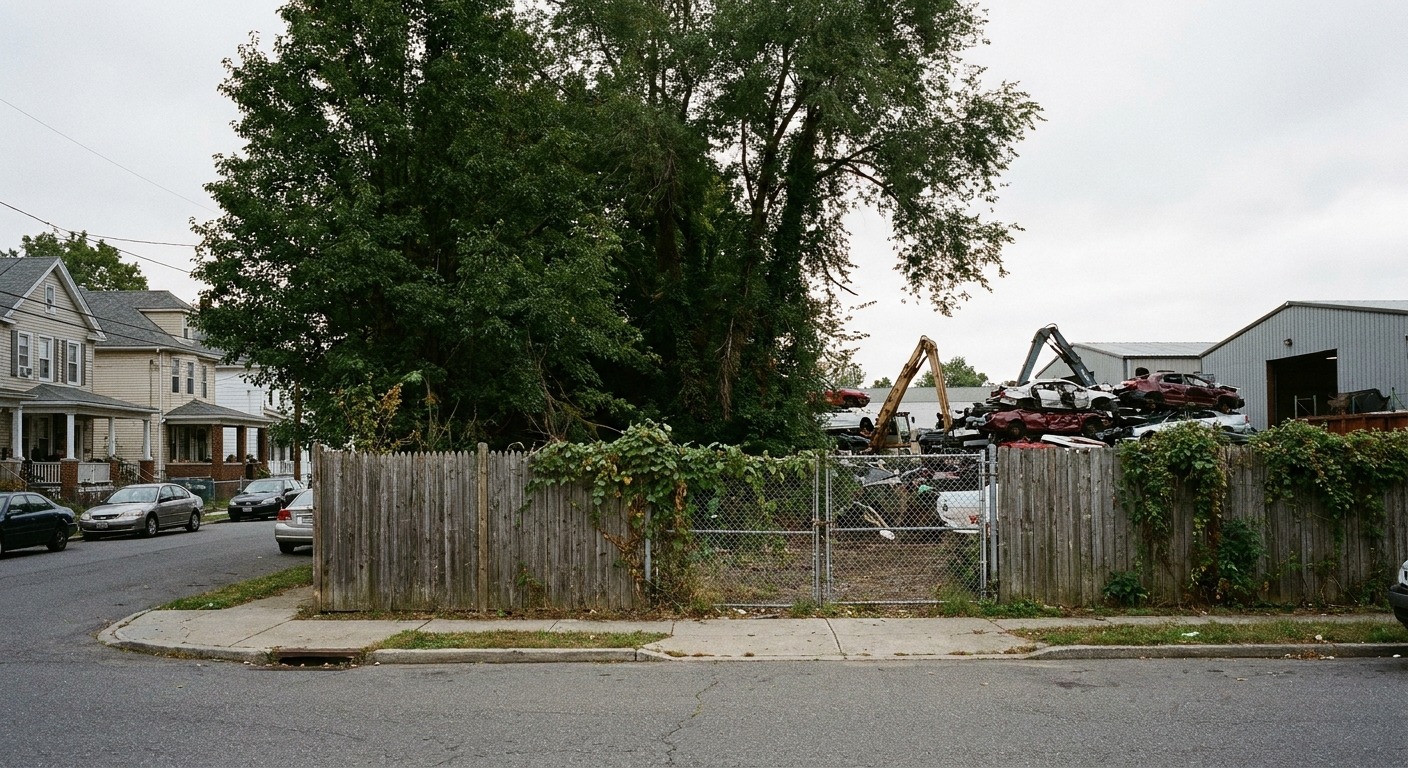
The gap between the modern operation and the public perception is enormous. Municipalities often evaluate auto recycling applications against a mental model that is 40 years out of date. It is as if restaurant licensing boards still assumed every kitchen looked like a nineteenth-century slaughterhouse.
The Irony: Where Municipal Recycling Actually Goes
Here is what makes the municipal opposition to auto recyclers particularly difficult to take seriously. The same municipalities that reject salvage yard applications on environmental or aesthetic grounds are running curbside recycling programs with contamination rates above 25 percent. They ship sorted material to brokers who export it to facilities in Southeast Asia that would not meet Canadian environmental standards. They count material as "diverted" when it leaves the MRF, regardless of whether it actually gets recycled.
A municipal council that blocks a local auto recycler — an operation that would recover 80 to 85 percent of material by weight, under direct provincial environmental oversight — and then celebrates its blue-bin program is engaged in a contradiction so basic it should embarrass anyone who examines it.
The environmental math is not close. Auto recyclers recover more material, more efficiently, with better environmental controls, than the curbside programs those same municipalities operate. But the curbside program looks clean from the street, and the wrecking yard does not.
Insurance and Liability Theatre
Another lever municipalities use to resist auto recycling operations is insurance and liability. Planners sometimes raise concerns about fire risk, soil contamination liability, or the long-term environmental costs if an operator goes out of business. These are legitimate considerations, but they are routinely overblown and selectively applied.
Auto recyclers carry commercial general liability insurance and, in many provinces, are required to maintain environmental impairment liability coverage. Provincial regulations require financial assurance for site remediation in some jurisdictions. The fire risk at a well-managed yard — where fluids are drained before storage — is materially lower than at a facility handling volatile materials, yet you rarely see the same scrutiny applied to gas stations, dry cleaners, or auto body shops, all of which handle hazardous substances in commercial zones.
The selective application of concern is revealing. It suggests that the real objection is not risk management but resistance to a land use that carries social stigma. The insurance and liability language gives that resistance a veneer of technical legitimacy.
What Honest Municipal Policy Would Look Like
A municipality that was genuinely committed to waste diversion and environmental protection would do several things differently.
- Evaluate auto recycling on current standards, not historical stereotypes. Planning reports should reflect the operational reality of modern certified yards, not the unregulated operations of the 1970s.
- Zone adequate industrial land for recycling operations. If a municipality wants recycling to happen — and they all claim they do — then they must zone land where recycling can physically occur. That means accommodating heavy equipment, outdoor storage, and truck traffic.
- Compare environmental performance across waste streams. If the curbside program has a 27 percent contamination rate and the local auto recycler has an 83 percent recovery rate, the council should be able to explain why one gets public funding and the other gets opposition.
- Require screening, not prohibition. Visual impact can be mitigated with berms, fencing, and vegetation. Banning an entire land use because it is not pretty enough is aesthetic regulation masquerading as environmental policy.
None of this is radical. It is basic consistency. But consistency is rare in municipal politics, particularly when residents are upset and elections are approaching.
"Every councillor wants to stand in front of a new recycling depot for the photo op. None of them want to stand in front of a wrecking yard. But the wrecking yard recycles more material." — Saskatchewan auto recycler, in business since 1987
The opposition to auto wrecking yards is rooted in aesthetics, stigma, and political convenience. It is not rooted in environmental evidence. Municipalities that block auto recyclers while promoting underperforming curbside programs are choosing optics over outcomes. And the environment — the thing they claim to be protecting — is worse off for it. If this subject interests you, the broader context of industrial recycling and public perception tells the same story across multiple sectors.