Steel and aluminum get all the attention in recycling conversations because they are easy wins. Magnetic separation, eddy currents, melt, pour, done. The markets are established, the economics work, and the tonnage numbers look great on an annual report.
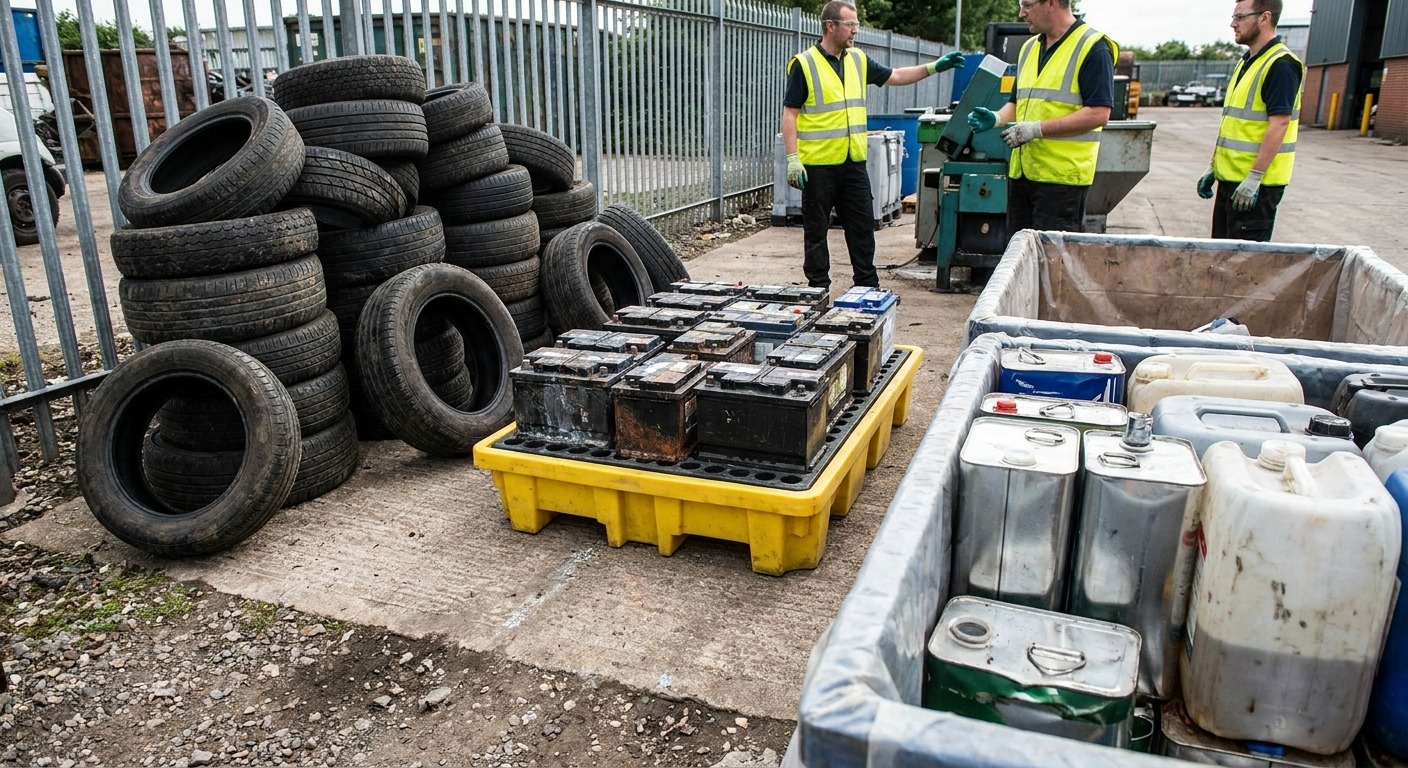
But a car is not just steel and aluminum. A car is also 8 litres of used motor oil, 10 litres of ethylene glycol coolant, a pressurized canister of climate-wrecking refrigerant, a lead-acid battery full of sulfuric acid, four tires made of vulcanized rubber that will not biodegrade for centuries, and a windshield bonded with a plastic interlayer that makes it nearly impossible to recycle as glass.
These are the hard parts. Your municipal recycling program will not touch any of them. Certified auto recyclers handle all of them, every day, as standard operating procedure.
Refrigerant: The Greenhouse Gas in Your Dashboard
Every vehicle with air conditioning contains refrigerant — either R-134a (HFC-134a) in vehicles built before approximately 2017, or R-1234yf (HFO-1234yf) in newer models. The difference between these two chemicals matters enormously for the climate.
R-134a has a global warming potential (GWP) of 1,430. That means one kilogram of R-134a released into the atmosphere traps as much heat as 1,430 kilograms of CO2 over a 100-year period. A typical vehicle AC system holds 0.5 to 1.0 kg of the stuff. Venting a single car's refrigerant is the CO2-equivalent of driving that car for months.
1,430x — the global warming potential of R-134a refrigerant vs CO2. Venting a single vehicle's AC charge equals hundreds of kilograms of CO2-equivalent emissions.
Under the Canadian Environmental Protection Act, venting refrigerants is illegal. Federal regulations require that anyone handling automotive refrigerant use certified recovery equipment and hold proper certification. At licensed auto recycling facilities, refrigerant recovery is one of the first steps in vehicle processing — it happens before a single bolt gets turned.
R-1234yf, the newer replacement, has a GWP of less than 1 — essentially climate-neutral. But the transition is slow. Millions of vehicles on Canadian roads and in the recycling stream still run R-134a, and they will for another decade. Proper recovery at end of life is one of the few things standing between those refrigerant charges and the atmosphere.
Engine Oil, Transmission Fluid, and Brake Fluid
A single litre of used motor oil can contaminate one million litres of fresh water. That is not rhetoric — it is the standard figure used by Environment and Climate Change Canada and provincial environment ministries in their waste oil education materials.
A typical end-of-life vehicle contains:
- 4–8 litres of engine oil
- 4–12 litres of automatic transmission fluid
- 0.5–1.5 litres of power steering fluid
- 0.5–1 litre of brake fluid
- 6–12 litres of coolant
- Variable fuel remaining in the tank — sometimes 50+ litres
At a certified facility, all of these get drained into separate collection systems before dismantling begins. Used oil and transmission fluid go to re-refiners who process them back into base lubricant stock. Coolant gets recycled into new antifreeze. Brake fluid, being hygroscopic and contamination-prone, typically goes to high-temperature incineration or specialized treatment.
None of these materials are accepted in municipal hazardous waste depots in the volumes that auto recyclers handle. A single busy yard might drain 50,000 litres of used oil per year. That oil either gets captured properly or it goes into the ground. The economics of auto recycling ensure it gets captured, because the fluids have resale or disposal value that offsets handling costs.
Mercury Switches: Small, Toxic, Everywhere
Vehicles manufactured before 2003 commonly contain mercury-filled tilt switches in trunk and hood convenience lighting. Each switch holds roughly one gram of liquid mercury — enough to contaminate a small lake if it reaches a waterway.
The Automotive Recyclers of Canada and their US counterpart ran the Switch Out program for years, collecting millions of mercury switches from end-of-life vehicles before they reached shredders. Without removal, the mercury would vaporize during the shredding and steel melting process, entering either the atmosphere or the EAF baghouse dust — both bad outcomes.
Mercury switch removal is a standard step in vehicle depollution at any reputable recycler. It takes about 30 seconds per switch, but scaling that across a million pre-2003 vehicles per year adds up to a significant mercury diversion effort that happens almost entirely below public awareness.
Catalytic Converters: Precious Metals in the Exhaust
Every gasoline and diesel vehicle built since the mid-1970s (and all Canadian vehicles since the 1980s) carries a catalytic converter containing platinum group metals (PGMs): platinum, palladium, and rhodium. These metals catalyze the conversion of carbon monoxide, hydrocarbons, and nitrogen oxides into less harmful emissions.
A single catalytic converter contains 1 to 7 grams of PGMs, depending on the vehicle. At current market prices, that material is worth $50 to $500+ per unit, which is exactly why catalytic converter theft has become a national problem. But it is also why legitimate auto recyclers carefully remove and sell converters to licensed refiners.
PGM mining — primarily in South Africa and Russia — is extraordinarily environmentally destructive. It takes roughly 10 tonnes of ore to produce one ounce of platinum. Every catalytic converter recovered and refined through the auto recycling stream is PGM that does not need to be mined. The recovery economics are so strong that recycling rates for PGMs from auto catalysts exceed 90 percent in established markets.
Lead-Acid Batteries: The Recycling Success Story
Lead-acid starter batteries are actually one of the good-news stories in material recovery. They are recycled at a rate above 98 percent in Canada, making them the most recycled consumer product in the country by recovery rate.
Each battery contains 8 to 15 kg of lead and several litres of sulfuric acid electrolyte. Recyclers remove the battery early in the depollution sequence, and collected batteries go to secondary lead smelters where the lead is recovered, the acid is neutralized or recycled, and the polypropylene cases are reprocessed into new battery cases.
98%+ recycling rate for lead-acid automotive batteries in Canada — the highest recovery rate of any consumer product, driven entirely by established auto recycling economics.
The reason the rate is so high is simple: lead has value, collection infrastructure exists through auto recyclers and parts stores, and regulation prohibits disposal in landfill. It is a case study in how economic incentive and sensible regulation can make near-total recovery the default outcome.
Tires: The Material That Refuses to Die
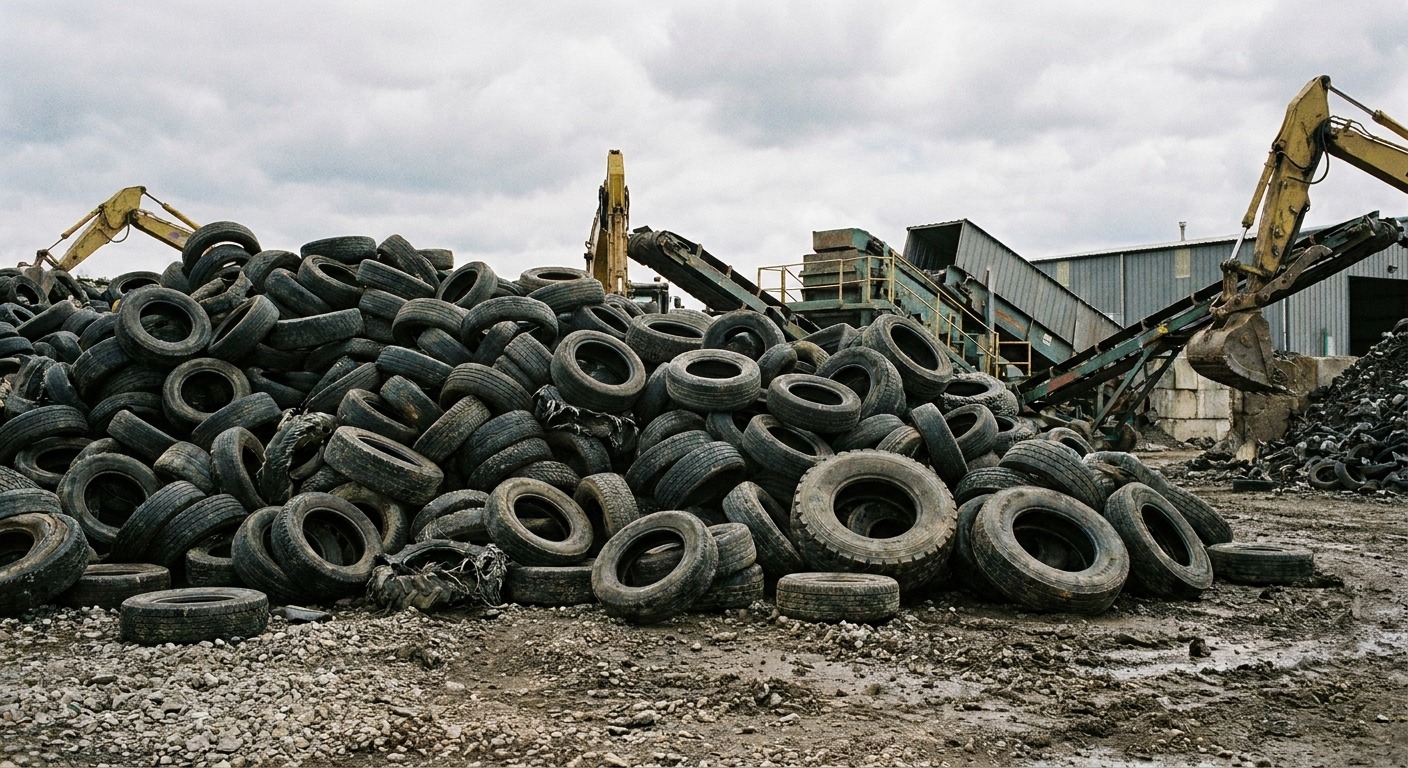
Vulcanized rubber does not biodegrade in any meaningful human timeframe. A tire in a landfill will still be recognizably a tire in 500 years. Canada generates roughly 300,000 tonnes of scrap tires annually, and end-of-life vehicles contribute a significant portion of that stream.
Downstream options include rubber crumb (playgrounds, athletic tracks), tire-derived fuel for cement kilns and pulp mills, civil engineering fill, and pyrolysis into carbon black and oil. Most provincial tire stewardship programs exist because the market alone could not solve the problem. Auto recyclers serve as aggregation points that make collection logistics viable, especially in rural and northern regions.
Windshield Glass: The PVB Problem
Here is one most people have never thought about. Your windshield is not just glass. It is two layers of glass bonded to a polyvinyl butyral (PVB) interlayer — that is what keeps the glass from shattering into your lap during a crash. It is a brilliant safety innovation and a genuine recycling headache.
The PVB interlayer makes windshield glass incompatible with standard glass recycling streams. Container glass recyclers will reject automotive windshields because the PVB contaminates the melt. Separating the PVB from the glass requires specialized equipment — typically heating the laminate and mechanically peeling the layers apart.
Some dedicated processors do recycle laminated windshields, recovering both glass cullet and PVB, but capacity is limited and logistics costs make it uneconomical for remote yards. Tempered side and rear glass is easier — single-layer, no PVB — and feeds into fiberglass production and abrasive manufacturing when properly sorted.
Auto recyclers separate these streams as a matter of course. Windshields go one way, tempered glass another, and both get directed to whatever downstream market is available in their region. Imperfect, but it would not happen at all without the sorting that takes place at the recycling facility.
Why This Matters: The Stuff Nobody Else Handles
The core point is this: auto recyclers are the front line for materials that the rest of the recycling system cannot or will not process. Refrigerants, mercury, PGMs, lead-acid batteries, bulk waste oil, vulcanized rubber, laminated glass — try dropping any of these at your local blue-bin depot and see what happens.
When critics challenge the presence of auto wrecking facilities in their communities, they are challenging the only operation in the waste management chain that accepts all of these streams, processes them according to established certification standards, and does so at scale without relying on municipal tax revenue.
The hard parts of auto recycling are hard because the materials are complex, hazardous, or economically marginal. It is not glamorous work. But it is essential, performed by people who handle these materials properly because their certifications, their insurance, and their livelihoods depend on it. That is a system worth defending.