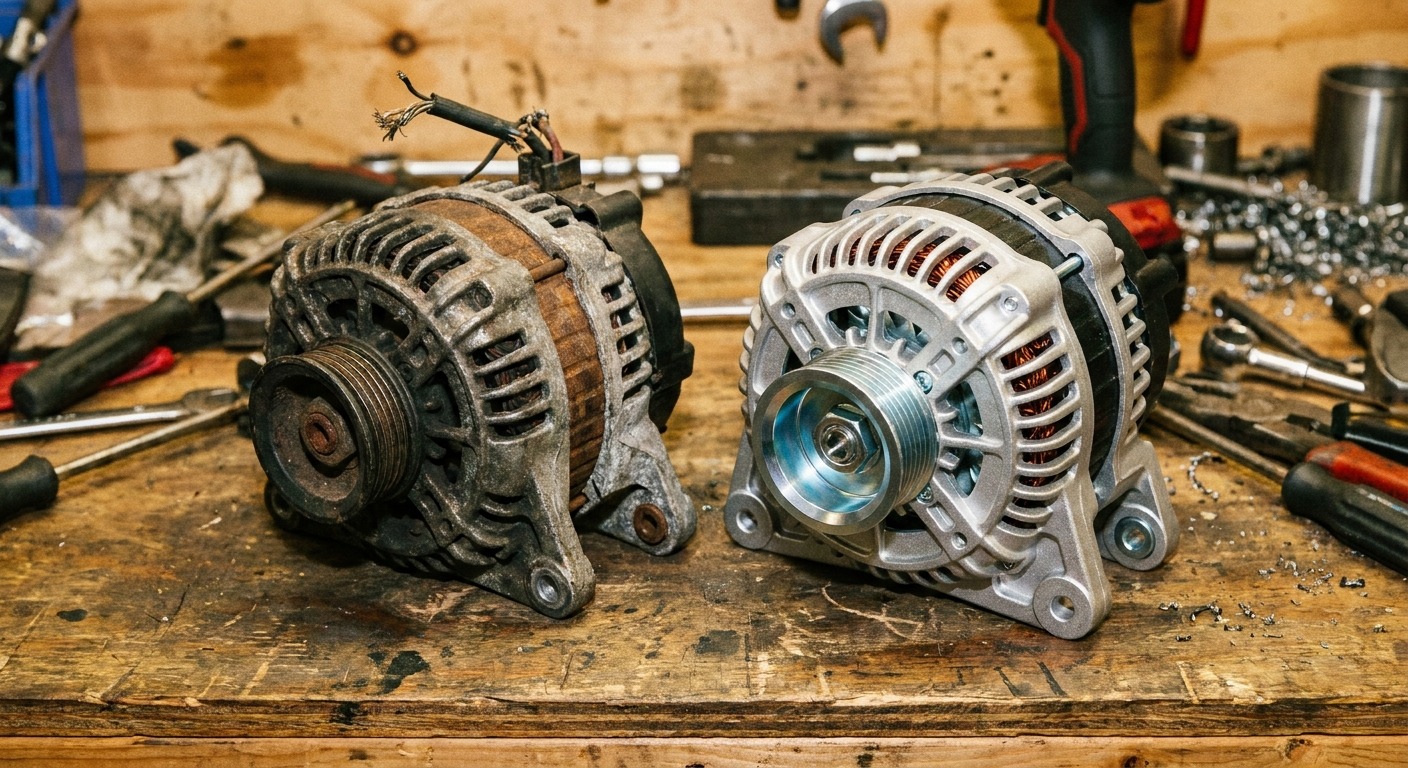
Walk into any independent repair shop in Canada and ask the owner what keeps them in business. The answer, almost universally, is access to salvage parts. Not aftermarket knockoffs from overseas. Not dealer-priced OEM components that make a $400 repair into an $1,100 one. Salvage parts — original equipment pulled from end-of-life vehicles, tested, inventoried, and sold at a fraction of what dealerships charge.
This is not a fringe cost-saving trick. It is the backbone of affordable vehicle repair in this country, and it has been for decades. The math is not complicated, but it is worth laying out clearly, because the parts pricing ecosystem in Canada is less transparent than it should be.
The Price Spread: What You Actually Save
The general range is well established: a used OEM part from a salvage yard costs 30% to 70% less than the equivalent new OEM part from a dealer. Where you land in that range depends on the component, the vehicle, and the yard.
| Component | New OEM (Dealer) | Used OEM (Salvage) | Savings |
|---|---|---|---|
| Alternator (2018 Honda CR-V) | $680 | $195 | 71% |
| Front door assembly (2019 F-150) | $2,400+ | $750 | 69% |
| Transmission (2017 RAV4) | $4,800 | $1,600 | 67% |
| Headlight assembly (2020 Civic) | $1,100 | $380 | 65% |
| Engine control module (2016 Silverado) | $950 | $325 | 66% |
These are representative figures drawn from Canadian salvage inventory listings and dealer parts counters. The pattern holds across nearly every make and model. On high-demand vehicles — Honda, Toyota, Ford, GM — the savings tend to be largest because supply in salvage yards is deepest.
Same Manufacturer, Same Spec
The single most important thing to understand about used OEM parts is what the acronym means. OEM: Original Equipment Manufacturer. A salvage alternator pulled from a 2018 Honda CR-V was made by the same company, on the same production line, to the same engineering specification as the one sitting in a dealer's parts bin. The difference is that it has some service hours on it.
For mechanical and electrical components, this matters enormously. The engineering tolerances, material specifications, and fitment are identical. There is no adaptation, no compatibility guessing, no hoping the bolt pattern lines up. It was designed for that exact vehicle.
"The part was good enough for Honda to put in the car at the factory. It doesn't become a lesser part because the car it was in got rear-ended." — Ontario auto recycler, 32 years in business
This is the fundamental distinction that separates salvage OEM from aftermarket parts — a distinction that consumers, and even some in the insurance industry, routinely blur.
The Aftermarket Alternative Is Not What People Think
Aftermarket parts are new components manufactured by third-party companies, not the original automaker or its contracted suppliers. They are priced between salvage OEM and new OEM, and they occupy a complicated middle ground in terms of quality.
Some aftermarket parts are perfectly adequate. Many are not. The Canadian collision repair industry has documented persistent issues with aftermarket body panels that do not fit properly, headlight assemblies with incorrect beam patterns, and radiators that fail prematurely. The Insurance Bureau of Canada acknowledges the role of aftermarket parts in claims but leaves quality enforcement largely to shops and consumers.
- Aftermarket body panels frequently require additional labour to fit, erasing much of the cost savings
- Non-OEM electrical components may lack proper connector types or weather sealing
- Warranty coverage on aftermarket parts varies wildly by manufacturer and distributor
- Fit issues can create safety concerns — particularly with lighting and structural components
A used OEM part sidesteps all of this. It fits. It was engineered for the vehicle. The only variable is the remaining service life, and on most components pulled from vehicles totalled due to collision damage, that remaining life is substantial.
How Salvage Yards Test and Warranty Parts
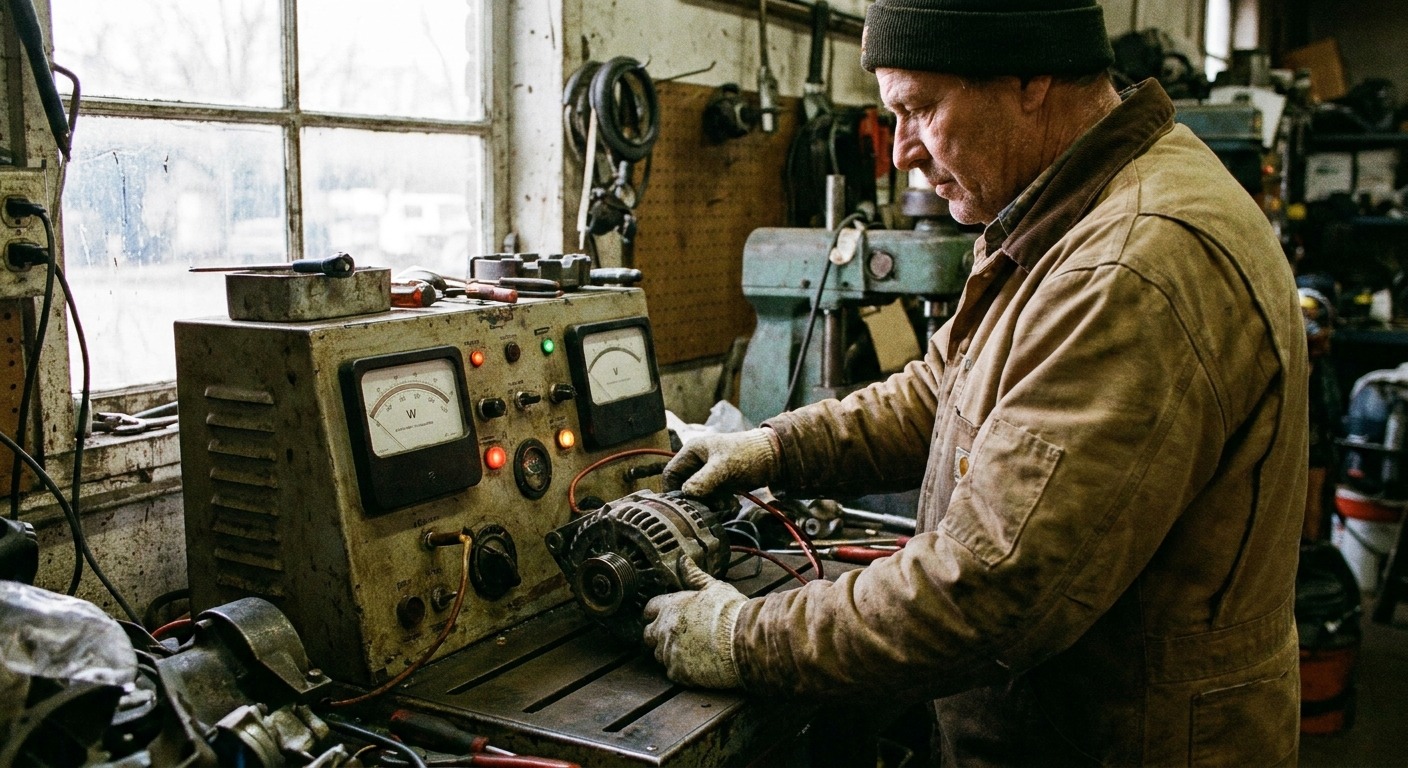
Professional auto recyclers do not just yank parts and toss them on a shelf. The process at any reputable Canadian yard involves systematic evaluation, and yards certified through Automotive Recyclers of Canada follow documented protocols.
- Visual inspection
- Check for physical damage, corrosion, wear patterns, and signs of previous repair or modification.
- Functional testing
- Electrical components are bench-tested. Engines and transmissions are run-tested or compression-tested where possible.
- Grading
- Parts are assigned quality grades (typically A through C) based on condition, mileage, and remaining service life.
- Warranty
- Most professional yards offer 30 to 90 day warranties on parts, with extended warranties available on major drivetrain components.
The industry has moved well past the days of pulling parts in a muddy field. Modern yards operate networked inventory systems — a shop in Halifax can locate a specific transmission from a yard in Winnipeg and have it shipped in days. This national parts network is what gives salvage its pricing power and availability.
Independent Shops Cannot Survive Without Salvage
There are roughly 25,000 independent automotive repair shops in Canada. They compete directly with dealership service departments, and they do it primarily on price. If you strip away access to salvage parts, that competitive position collapses.
Dealer service departments have captive access to new OEM parts at wholesale. They mark those parts up, bundle them with labour, and present the total. An independent shop doing the same repair with the same new OEM parts — purchased at retail from the dealer's parts counter — has almost no margin advantage. The relationship between salvage supply and repair cost is direct and measurable.
Salvage parts are the equalizer. They allow independent shops to offer repairs at 30–50% less than dealer service, with equivalent or identical parts quality. Remove that option and you hand the entire repair market to dealerships — which is, not coincidentally, a direction that some OEMs are quietly pushing through parts restrictions and diagnostic software lockouts.
The right-to-repair movement in Canada is directly connected to this issue. Access to salvage parts is not just an environmental question — it is a competition and consumer choice question.
Warranty Considerations for Consumers
One of the persistent myths about used parts is that installing them voids your vehicle's warranty. Under Canadian competition law, this is not accurate. A manufacturer cannot void a warranty solely because a non-dealer part was used in a repair, provided the part did not cause the failure being claimed.
The practical reality is more nuanced:
- If a salvage engine control module causes an electrical fault, the manufacturer can deny warranty on that specific system — but not on unrelated components
- Dealers sometimes push back on warranty claims when they see non-dealer parts, but this is a compliance issue, not a legal right
- Keeping records of part purchases and installation is important for any warranty dispute
- Most salvage parts go into vehicles already outside their factory warranty period, where this concern is moot
For vehicles still under warranty, the safest approach is to use salvage OEM parts (identical to what the factory installed) and keep documentation. For the vast majority of the Canadian vehicle fleet — average age now over 12 years — warranty status is irrelevant, and salvage parts are the obvious economic choice.
The Bigger Picture: Savings and Sustainability
Every salvage part sold is a part that did not need to be manufactured from raw materials. The carbon math of auto recycling is driven in significant part by parts reuse, not just metal recovery. A reused transmission represents thousands of kilograms of avoided manufacturing emissions. A reused door assembly means no new steel stamping, no new paint application, no new shipping from an overseas plant.
When someone tells you that auto wrecking yards are environmental problems, ask them what the alternative is: manufacturing every replacement part from scratch, shipping it across the Pacific, and charging the consumer three times as much. That is the actual alternative. And it is worse by every metric — cost, carbon, resource consumption, and consumer choice.
The roughly 500,000 vehicles written off in Canada each year are not waste. They are inventory. Every one of them carries hundreds of reusable parts that keep repair affordable, keep independent shops open, and keep Canadians on the road without taking out loans for routine fixes. That is worth defending.
If you want to understand how the broader regulatory framework supports — or complicates — this system, read our overview of Canadian auto recycling regulations.