Here is a question that gets asked surprisingly little in Canadian environmental debates: where does steel come from, and what does it cost the planet to make it?
Canada uses roughly 14 million tonnes of steel every year. Some of it comes from iron ore dug out of the ground in Labrador, northern Ontario, and Quebec, shipped to blast furnaces, and cooked at extraordinary energy cost into new metal. And some of it comes from scrap — including the crushed, shredded hulls of end-of-life vehicles that Canadian auto recyclers process by the millions.
The environmental difference between those two paths is not subtle. It is enormous. And auto hulks are the single largest source of recycled steel scrap in North America.
The Virgin Steel Route: What Mining Actually Costs
Making steel from scratch starts with iron ore mining. In Canada, that means open-pit operations in remote northern landscapes — the kind of places that look pristine on tourism websites until someone finds a deposit worth extracting.
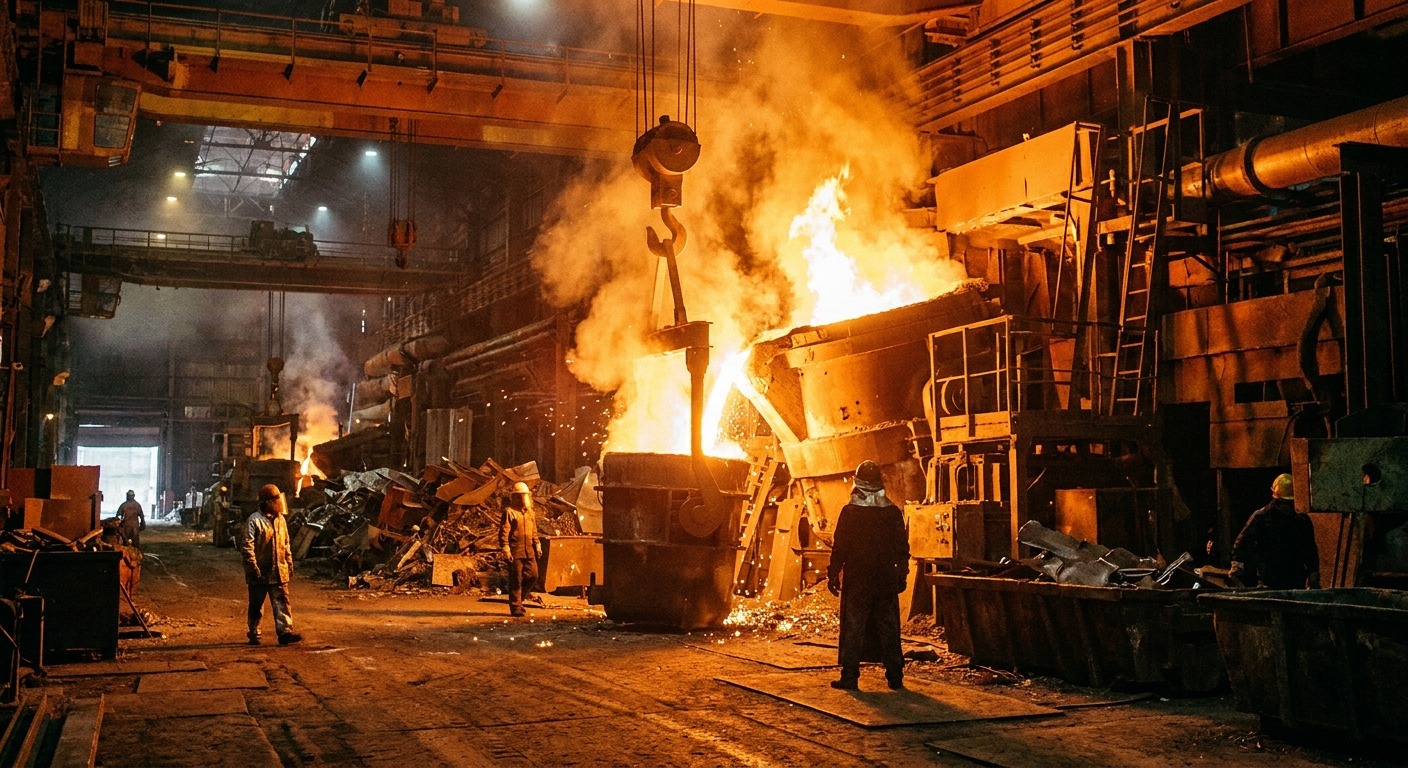
The process goes roughly like this: blast and excavate billions of tonnes of rock, crush and concentrate it to raise the iron content from 25-30% to 60-65%, pelletize it, ship it by rail to a port, load it onto lake freighters or ocean vessels, deliver it to an integrated steel mill, feed it into a blast furnace along with coke (cooked coal), limestone, and injected natural gas, and heat the entire mass to over 1,500°C. The molten iron then goes to a basic oxygen furnace (BOF) where it gets refined into steel.
At every stage, the environmental toll is significant:
- Habitat destruction
- Open-pit iron ore mines in Canada cover thousands of hectares. The pits, waste rock piles, tailings impoundments, and access roads permanently alter boreal forest ecosystems, watersheds, and caribou habitat.
- Tailings and waste rock
- For every tonne of iron ore concentrate, several tonnes of waste rock and tailings get produced. Tailings ponds in iron mining regions span hundreds of hectares. They require perpetual monitoring and management even after a mine closes.
- Energy consumption
- The blast furnace / BOF route is one of the most energy-intensive industrial processes on Earth. Coke production alone requires heating coal to 1,100°C in oxygen-starved ovens for 16 to 18 hours.
- CO2 emissions
- The BF-BOF steelmaking route produces approximately 1.8 to 2.2 tonnes of CO2 per tonne of crude steel. Globally, steel production accounts for roughly 7 to 9 percent of all direct CO2 emissions from fossil fuels.
- Water use
- Integrated steelmaking uses massive volumes of water for cooling, dust suppression, coke quenching, and gas cleaning. Iron ore processing itself is water-intensive, requiring slurry pipelines and flotation circuits.
This is what we are comparing to when we talk about recycled steel. Not a theoretical baseline — an actual, operating, landscape-altering industrial chain that starts with blasting rock out of the Canadian Shield.
The Scrap Route: Electric Arc Furnaces and Auto Hulks
Now consider the alternative. A salvage yard processes an end-of-life vehicle: drains the fluids, removes hazardous components, pulls saleable parts, crushes the hull, and sends it to a shredder. The shredder produces a clean ferrous scrap that goes directly into an electric arc furnace.
An EAF is conceptually simple: fill a vessel with scrap steel, strike an electric arc between graphite electrodes and the metal, and melt everything at around 1,600°C. The molten steel gets refined, alloyed to specification, and cast into new products. No mining. No coke. No blast furnace. No tailings ponds.
74% less energy to produce steel from scrap in an electric arc furnace compared to the blast furnace / BOF route using virgin iron ore — World Steel Association
The numbers from the World Steel Association and corroborated by multiple lifecycle assessments tell a consistent story:
- 74% less energy — EAF steelmaking from scrap vs. BF-BOF from ore
- 90% less virgin raw material — scrap replaces iron ore, coke, and limestone
- 40% less water consumed — no ore processing, no coke quenching
- 76% less water pollution — elimination of mining runoff, tailings seepage, and coke plant effluent
- 86% less air pollution — no coking emissions, no sinter plant, no blast furnace top gas
These are not marginal improvements. These are the kind of reductions that environmental policy normally spends billions trying to achieve through regulation and incentive programs.
Auto Hulks: The Biggest Scrap Source Nobody Credits
The steel industry has a term for the different grades of scrap that feed EAFs. There is "prompt scrap" (manufacturing offcuts), "obsolete scrap" (end-of-life products), and "home scrap" (internal mill returns). Auto hulks fall into the obsolete category, and they dominate it.
Shredded auto bodies are the largest single source of recycled ferrous scrap in North America. The 1.5 million vehicles processed annually in Canada contribute roughly a million tonnes of ferrous metal to the recycled steel supply chain. In the United States, the number is over 12 million vehicles per year.
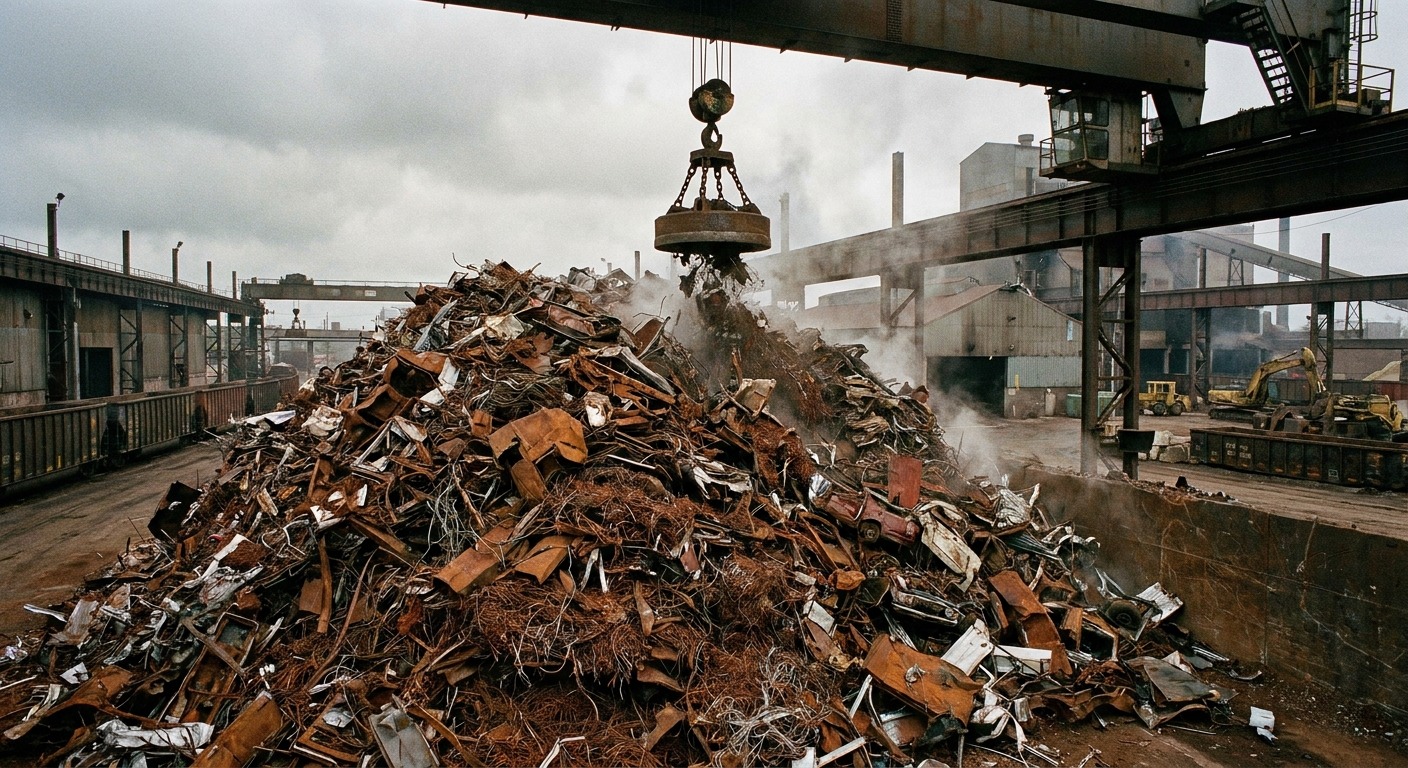
That scrap feeds mills in Hamilton, Contrecoeur, and across the border in the American Midwest. Without it, those mills would need to source more virgin material, driving more mining, more energy consumption, and more emissions. The auto recycling industry is not a minor contributor to the steel supply chain — it is a structural pillar of it.
The Air Quality Difference
The 86 percent reduction in air pollution deserves its own discussion because the emissions profile of ore-based steelmaking is genuinely alarming once you look at it component by component.
A coke oven battery — the facility that converts coal into the coke needed for blast furnaces — emits benzene, toluene, xylene, naphthalene, particulate matter, sulfur dioxide, and dozens of other volatile organic compounds. Coke plant workers have historically faced elevated cancer rates. Communities near coke ovens in Hamilton and Sydney (before its closure) have lived with air quality consequences for generations.
An EAF running on scrap steel has emissions too — primarily particulate matter, which is captured by baghouse filters, and CO2 from the electric arc and carbon injection. But the toxic emissions profile is a fraction of what the coke-and-blast-furnace route produces. The 86 percent air pollution reduction is not just a number — it represents communities that do not get sick.
86% less air pollution from EAF steelmaking using scrap vs. the blast furnace route. That difference is measured in avoided benzene, particulate matter, and sulfur emissions in real communities.
Water: The Story Nobody Tells
Water gets less attention than carbon in climate discussions, but the water footprint of virgin steelmaking is massive. Iron ore processing requires wet grinding, flotation, magnetic separation in water slurry, and extensive tailings management. Coke quenching uses water. Blast furnace gas cleaning uses water. Continuous casting uses water.
The 40 percent water reduction and 76 percent water pollution reduction from the scrap route matter enormously in a country where mining operations increasingly compete with Indigenous communities, municipalities, and ecosystems for clean water access. Every tonne of steel made from auto scrap instead of ore is water that stays in the watershed.
Canadian provincial regulations governing auto recyclers rightly require proper stormwater management and fluid containment. But the water footprint of a salvage yard processing vehicles is trivial compared to the iron ore mine and integrated steel mill that the recycled material replaces.
Why Policy Misses This
Canadian environmental policy does a reasonable job of regulating emissions from steel mills. It does a poor job of crediting the supply chain that makes lower-emission steelmaking possible. Auto recyclers feed the EAF route. Without their scrap, EAFs cannot operate. Yet zoning fights and municipal opposition regularly threaten the very facilities that make low-carbon steel production viable.
The disconnect is striking. Canada has a carbon pricing system. It has clean fuel standards. It has industrial emissions reporting. But nowhere in the policy stack is there a mechanism that looks at an auto recycler crushing hulls in Barrie or Brandon and says: this operation avoids more emissions per dollar invested than almost anything else we fund.
That is the number nobody talks about. Not because it is hard to calculate, but because it requires admitting that a muddy yard full of wrecked cars is doing more measurable environmental good than most of the programs that get announced at press conferences.
The data is there. The federal environment ministry has it. The World Steel Association publishes it. The auto recycling industry lives it every day. All that is missing is the willingness to connect the dots — and to build policy that reflects what the numbers actually say.
Every used part sold and every hull crushed and fed into an EAF is a small act of environmental sanity in a system that often prefers performance over results. The auto wrecking industry does not need a rebrand. It needs an honest accounting.