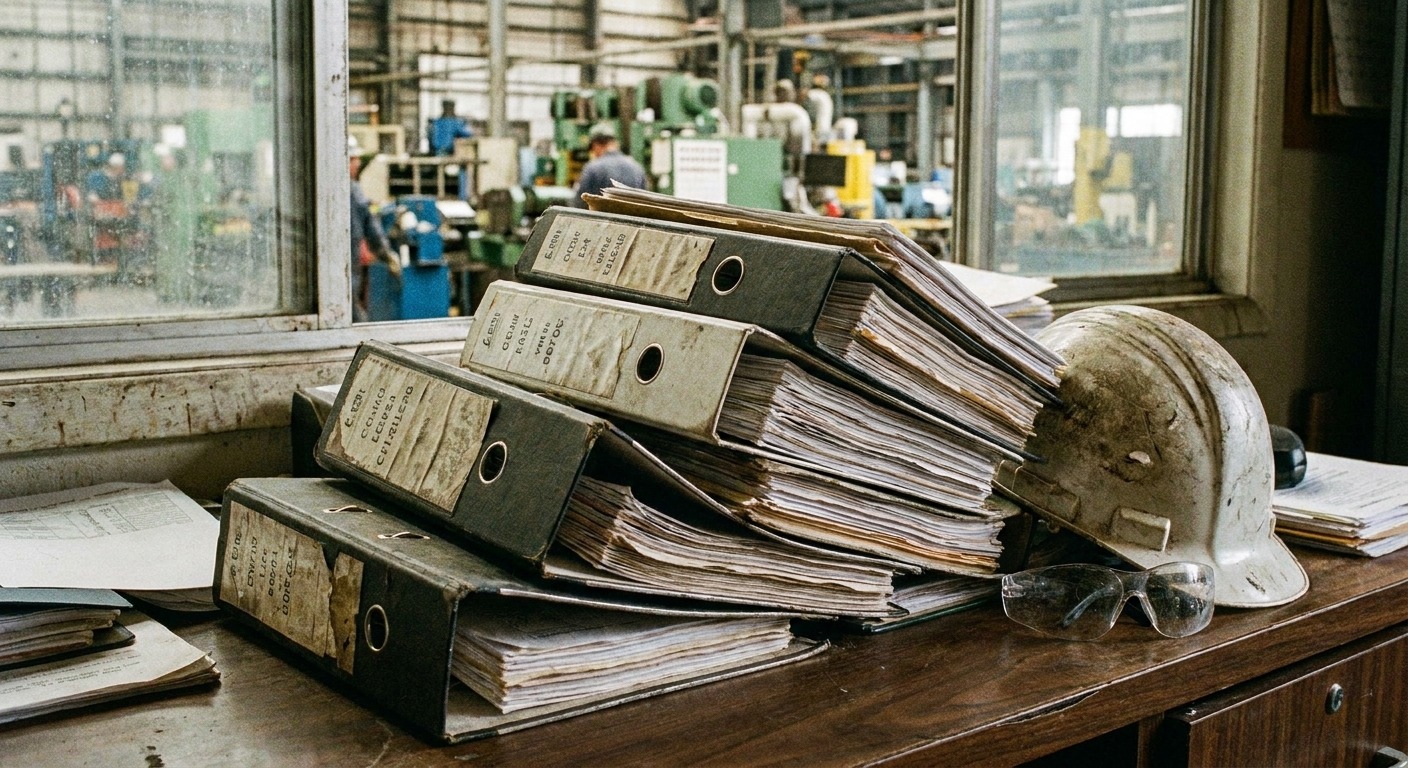
If you listen to the opponents of auto wrecking yards — and there are always opponents — you would think this is an unregulated free-for-all. Junk piled on bare dirt, fluids leaking into groundwater, nobody watching. The reality is that a professional auto recycler in Canada operates under more layers of regulation than most small businesses in any sector. The stack is thick, it is fragmented, and it is often redundant — but calling it absent is either ignorant or dishonest.
Understanding the regulatory framework matters because it shapes two things: the cost of compliance for operators (which affects which yards can survive) and the environmental performance of the industry (which determines whether the critics have a point). Here is the actual structure.
The Federal Layer: CEPA and Hazardous Materials
The Canadian Environmental Protection Act (CEPA) is the overarching federal environmental law that touches auto recycling. CEPA does not regulate auto recyclers specifically, but it establishes the framework for hazardous substance management that provincial regulators build on.
For auto recyclers, the federal relevance includes:
- Ozone-depleting substances: Vehicle air conditioning refrigerants (R-134a and the newer R-1234yf) are regulated under CEPA. Recyclers must recover refrigerant using certified equipment and cannot vent it to atmosphere
- PCBs: Older vehicle components, particularly some capacitors and electrical insulation, may contain polychlorinated biphenyls regulated under CEPA
- Mercury switches: Pre-2003 vehicles often contain mercury convenience light switches. CEPA regulates mercury, and the national Switch Out program (now largely completed) organized their removal
- Transportation of Dangerous Goods: Federal TDG regulations apply when recyclers ship waste fluids, batteries, or other hazardous materials off-site for processing
In practice, the federal layer sets floors. It establishes that certain substances must be managed in certain ways, regardless of where in Canada you operate. The detailed, day-to-day regulatory oversight falls to the provinces.
Provincial Environmental Approvals
This is where the real regulatory weight sits. Every province requires auto recyclers to hold some form of environmental approval, though the specific instrument, the requirements, and the enforcement rigour vary considerably. We cover the province-by-province comparison in detail in our piece on provincial differences in end-of-life vehicle rules, but the general structure looks like this:
- Environmental Compliance Approval (Ontario)
- Ontario's Environmental Compliance Approval (ECA) under the Environmental Protection Act is the most detailed provincial instrument. It covers air emissions, stormwater management, waste storage, fluid containment, and noise. Getting an ECA for a new auto recycling operation is a lengthy, expensive process involving engineering studies and public consultation.
- RECYC-QUEBEC Framework (Quebec)
- Quebec operates under its Environmental Quality Act with additional oversight from RECYC-QUEBEC on waste diversion. Auto recyclers must comply with hazardous waste regulations administered by the Ministere de l'Environnement.
- Product Stewardship (British Columbia)
- BC uses a product stewardship model where specific material streams (tires, lead-acid batteries, used oil, antifreeze) have dedicated recycling programs. Auto recyclers participate in multiple stewardship programs simultaneously.
- Alberta Environment and Protected Areas
- Alberta requires registration and compliance with waste management regulations but takes a generally less prescriptive approach than Ontario or BC, relying more on market-driven compliance.
The common elements across all provinces include requirements for:
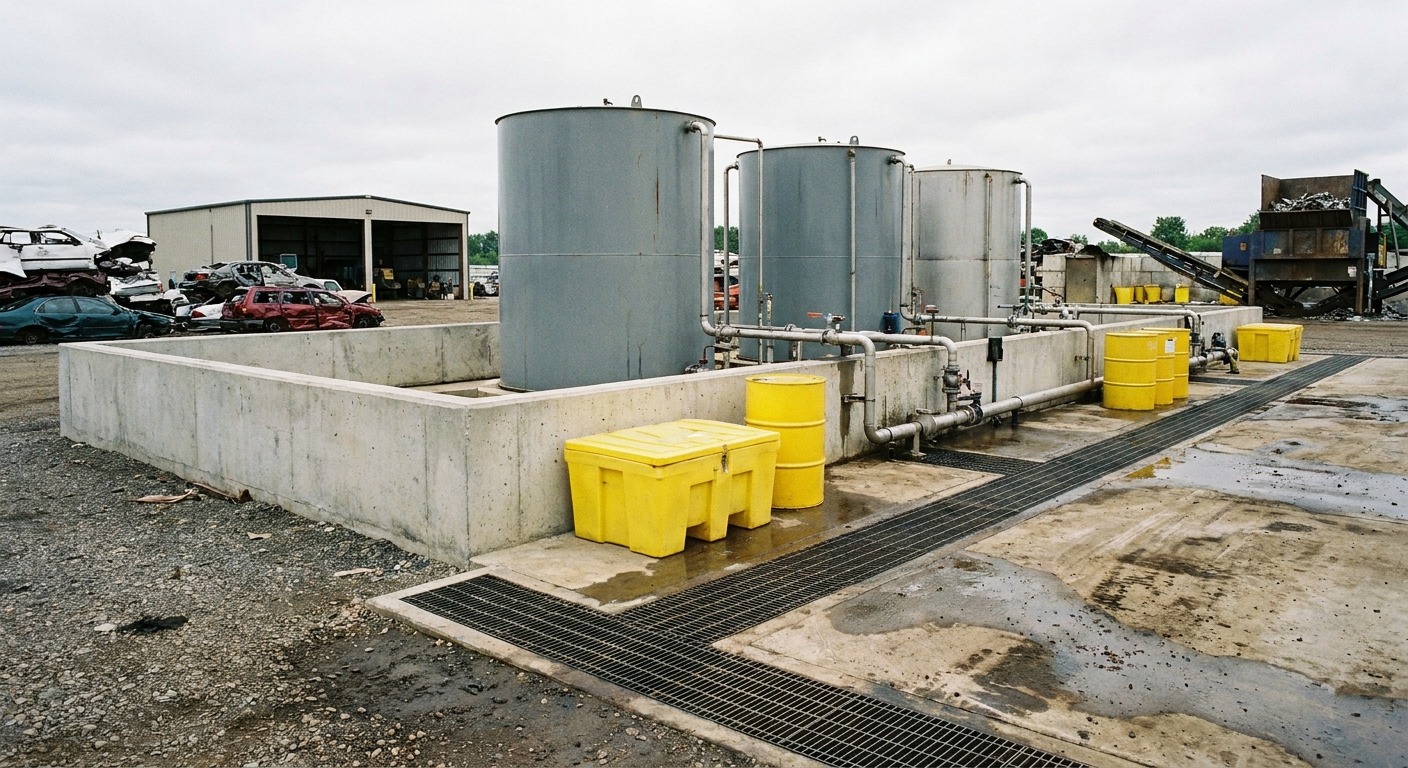
- Fluid containment and management — impermeable surfaces, collection systems, proper storage
- Waste classification and tracking — documenting what comes in, what goes out, and where
- Stormwater management — preventing contaminated runoff from reaching waterways
- Battery and refrigerant handling — specific protocols for these high-risk materials
- Reporting — periodic documentation to provincial environmental authorities
Municipal Zoning and Business Licensing
If provincial environmental approvals are the substantive regulatory layer, municipal zoning is the political one. This is where most of the fights happen, and where the gap between regulation and perception is widest.
Auto recycling operations are typically restricted to heavy industrial (M3 or equivalent) zoning categories. In many municipalities, they require site-specific zoning approvals or variances, which means public hearings, council votes, and all the neighbourhood opposition that entails.
Municipal requirements often include:
- Screening and fencing requirements (typically 2–3 metre solid fencing around storage areas)
- Setbacks from residential zones, waterways, and wells
- Maximum vehicle storage limits
- Operating hours restrictions
- Noise bylaws applicable to crushing, shearing, and loading operations
- Site plan approval covering drainage, access roads, and storage layout
The tension between municipal aesthetics and industrial necessity is real. Auto recycling requires outdoor storage of vehicles and parts. It involves heavy equipment. It generates noise during certain operations. These are legitimate land-use considerations. But they are often weaponized beyond proportion, with municipal councils using zoning as a tool to push out legally operating, environmentally compliant businesses because of neighbourhood opposition rooted in aesthetics rather than evidence.
ARC Voluntary Certification vs Mandatory Compliance
Automotive Recyclers of Canada (ARC) operates a voluntary certification program that goes beyond baseline regulatory compliance. We cover what ARC certification actually means in a separate article, but the key distinction in the regulatory landscape is this: ARC certification is not a legal requirement.
A yard can operate legally in Canada by meeting federal, provincial, and municipal requirements without ever applying for ARC certification. Many do exactly that. ARC certification represents an additional layer of environmental management, operational standards, and record-keeping that certified yards voluntarily adopt.
This creates a two-tier system:
| Standard | Mandatory Compliance | ARC Certification |
|---|---|---|
| Environmental approvals | Required by provincial law | Required, plus additional standards |
| Fluid management | Must meet provincial requirements | Detailed protocols with documentation |
| Parts testing | No mandatory standard | Required testing and grading system |
| Record keeping | Basic waste tracking | Comprehensive vehicle and parts tracking |
| Insurance | Basic business liability | Enhanced environmental liability coverage |
| Auditing | Provincial inspections (infrequent) | Periodic third-party audits |
The question of whether ARC certification should become mandatory is an ongoing industry debate. Proponents argue it would raise the floor and eliminate bad operators. Critics argue it would create compliance costs that drive small yards out of business, reducing parts availability and concentrating the industry among large operators — exactly the kind of consolidation that weakens the salvage supply chain's cost benefits.
Enforcement: The Weak Link
Regulations on paper mean nothing without enforcement, and this is the area where the Canadian system is weakest. Provincial environmental inspections of auto recycling facilities are infrequent in most jurisdictions. Ontario's Ministry of the Environment, Conservation and Parks has limited inspection staff relative to the number of regulated facilities. The situation is similar in most provinces.
This enforcement gap is the legitimate basis for criticism of the industry. When inspections are rare, some operators cut corners — deferring maintenance on fluid containment systems, storing vehicles on unpaved surfaces, failing to properly manage waste streams. These operators exist, and they undermine the credibility of the entire industry.
"We spend real money on compliance — concrete pads, containment, proper disposal contracts, record keeping. Then the yard down the road does none of that, never gets inspected, and charges less because their overhead is lower. That's the enforcement problem." — Certified auto recycler, British Columbia
The solution is not less regulation or more regulation — it is consistent enforcement of existing rules. The regulatory framework, as written, is largely adequate. The gap is in applying it uniformly. This is an area where the industry's own advocacy, through ARC and provincial associations, actually pushes for stronger enforcement — because compliant operators benefit when non-compliant competitors are held to account.
What the Critics Get Wrong — and Right
When environmental groups or municipal councils argue that auto wrecking yards are environmental hazards, they are sometimes pointing at real problems — yards that have not invested in proper containment, that have legacy soil contamination from decades of unregulated operation, that are genuinely mismanaged.
What they get wrong is the generalization. The regulatory framework exists. A significant and growing portion of the industry complies with it rigorously. The end-of-life vehicle processing chain at a compliant yard is an environmental net positive — recovering materials, preventing fluid contamination, and diverting massive volumes from landfill.
The productive conversation is not "should auto recyclers exist?" — they must, both economically and environmentally. The productive conversation is "how do we ensure every operator meets the standards that the best operators already exceed?" That requires adequate provincial inspection budgets, meaningful penalties for non-compliance, and support for the voluntary certification systems that are already raising the bar from within the industry.
Understanding the regulations is the first step to having that conversation honestly. The stack is complex, the enforcement is imperfect, and the industry is not monolithic. But the framework is real, and dismissing it to score rhetorical points against auto recyclers is not honest advocacy — it is laziness.