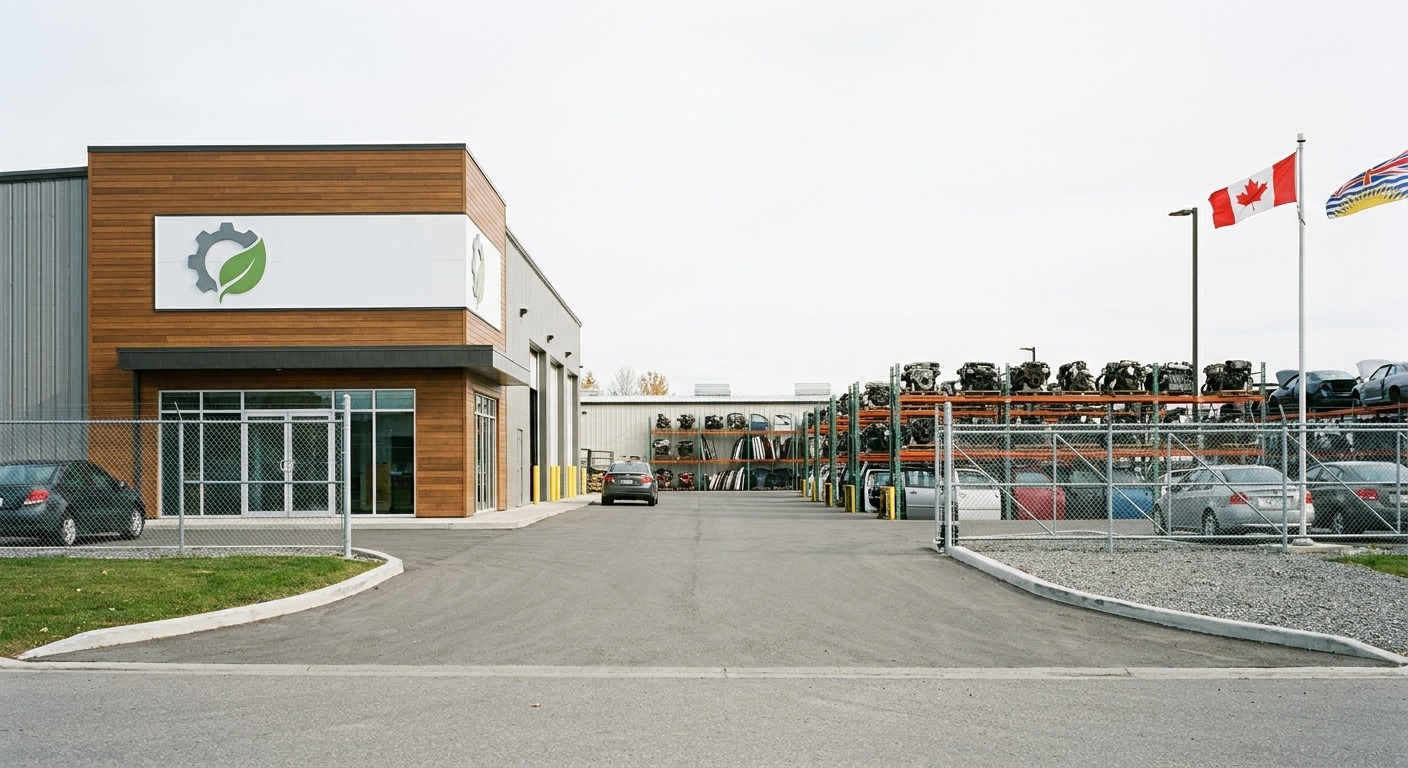
Not all auto recyclers are created equal. Like any industry, there is a range — from operations that set the standard for environmental compliance and customer service, down to a handful that give the rest a bad name. If you are buying used parts, selling a vehicle, or simply trying to figure out whether the yard down the road is doing right by the environment, it helps to know what good looks like. The markers are not hard to spot once you know where to look.
ARC Certification: The Baseline
The most straightforward indicator of a quality auto recycler in Canada is certification through the Automotive Recyclers of Canada (ARC). ARC's certification program — formerly known as the Canadian Auto Recyclers' Environmental Code (CAREC) — sets standards for environmental management, fluid handling, parts quality, and business practices.
Certification is not automatic. It requires an on-site audit, documented environmental procedures, proper fluid recovery infrastructure, trained staff, and ongoing compliance. Not every yard is certified, and certification is voluntary, which means the yards that have it chose to meet a higher standard than provincial regulations alone require.
ARC certification requires: sealed fluid drainage areas, proper hazardous waste handling, staff training, environmental record-keeping, and regular audits. It is the industry's own quality floor.
Does certification guarantee perfection? No. But it establishes a baseline of environmental seriousness and operational competence that separates professional operations from casual ones. If you are looking for a reliable indicator, start here.
Fluid Management: The Environmental Litmus Test
The single most important environmental practice at any auto recycling operation is fluid management. A vehicle contains engine oil, transmission fluid, coolant, brake fluid, power steering fluid, fuel, differential fluid, and refrigerant. If those fluids are not captured properly, they contaminate soil and groundwater. If they are captured, the risk drops to near zero.
- Sealed concrete pads under all fluid drainage areas, with containment curbs and collection sumps.
- Dedicated bulk tanks for different fluid types — not a single drum catching everything.
- Licensed waste hauler contracts for fluid removal and re-refining.
- Refrigerant recovery equipment operated by certified technicians under federal ODS regulations.
- Spill kits and response plans visible and accessible throughout the yard.
If you visit a yard and see vehicles on bare ground with fluids visibly leaking, that tells you what you need to know. A professional operation drains vehicles promptly on a proper surface, in compliance with provincial environmental requirements.
Digital Inventory: The Modern Standard
A yard that knows what it has — and can find it quickly — is a yard that is run well. Modern auto recyclers use computerized inventory systems, typically based on the Hollander Interchange standard, that catalogue every part by vehicle source, condition, and warehouse location.
- Fast part lookups. Call or go online; the yard checks the system, and you know within minutes whether they have your part.
- Network access. Many yards participate in multi-yard search networks (Car-Part.com, URG-affiliated platforms) spanning dozens or hundreds of yards across the country.
- Condition grading. Parts are graded using standardized codes — A (like new), B (good), C (fair) — so you know what to expect.
- Traceability. The yard can tell you which vehicle a part came from, the odometer reading, and when it was pulled.
If a yard cannot tell you what it has in stock without sending someone into the field to look, that is a red flag — not necessarily for environmental compliance, but for operational professionalism. Inventory management is the backbone of a modern parts business, and yards that invest in it tend to invest in everything else as well.
Warranties and Returns
Good auto recyclers stand behind their parts. A standard used-part warranty runs 30 to 90 days, depending on the part type and yard policy. Engines and transmissions often carry 6-month or 12-month coverage. A yard that warranties its parts is confident in its testing process — that confidence comes from consistent quality control, not guessing.
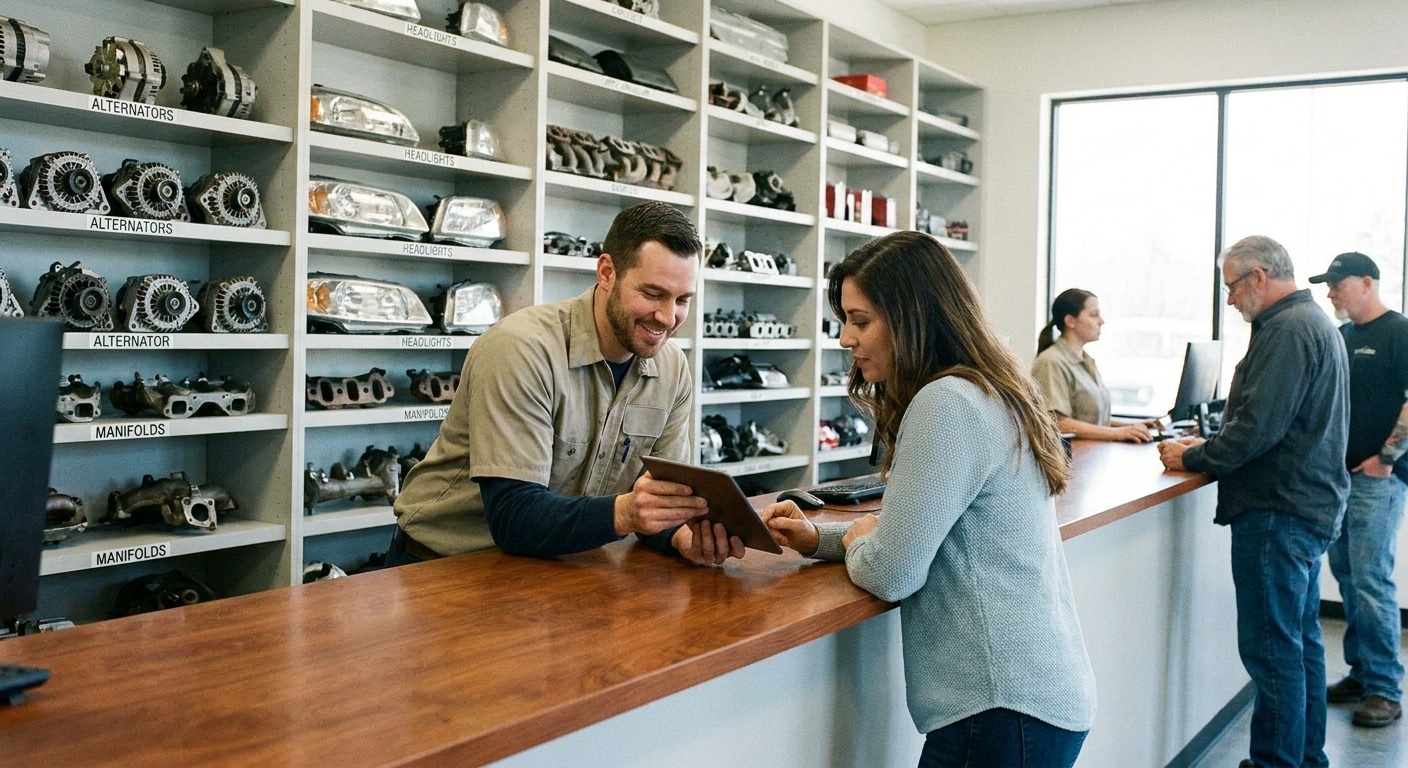
Ask about the warranty before you buy. A reputable yard states its terms clearly and honours them without argument. This is basic consumer protection applied to the salvage parts market, and good operators treat it as non-negotiable.
Yard Condition: Trust What You See
An auto recycling yard will never look like a showroom. But there is a clear difference between working industrial and neglected.
Signs of a well-run yard:
- Vehicles organized by row, tagged, and accessible.
- Clear driving lanes for equipment and customer vehicles.
- A parts warehouse that is shelved, labelled, and weatherproof.
- Drainage areas that are clean and maintained.
- Screening — fencing, berms, or vegetation — along property boundaries.
Red flags:
- Vehicles stacked haphazardly with no organization.
- Visible fluid staining on unpaved ground.
- Parts stored outdoors with no weather protection.
- No posted policies, no signage, no customer area.
Yard condition is a reliable proxy for management quality. Operations that invest in organization and infrastructure are almost always the same operations that invest in environmental compliance and customer service.
Small-Town Yards and Community Roots
Some of the best auto recyclers in Canada are small-town, family-run operations that have served their communities for two or three generations. These yards occupy a particular niche in the local economy — they keep repair costs manageable for residents who cannot afford dealership prices, they provide local employment, and they handle end-of-life vehicles that would otherwise have to be transported long distances for processing.
In smaller communities, the auto recycler is often part of a tightly connected network of local services: the mechanic who installs the parts, the tow operator who delivers the vehicles, the farmer who sells scrap metal from old equipment. You can find these kinds of interconnected service networks across rural Ontario and the Ottawa Valley — through township directories in places like Pembroke and Renfrew, or through the informal word-of-mouth networks that still operate in towns where everyone knows who does what. The recycler is not separate from the community. It is woven into the economic fabric.
There is a human dimension to these operations that gets lost in policy discussions. When the second-generation owner of a rural salvage yard talks about their business, they talk about the customers they have served for decades, the employees who have been with them for years, and the relationship with the land they operate on. These are not transient industrial operators looking for the cheapest disposal route. They are permanent members of their communities who have a personal stake in doing things right.
Multi-generational — many Canadian auto recycling operations have been family-owned for two or three generations. In an industry where reputation is everything, long tenure signals consistent quality.
Delivery, Shipping, and What to Ask Before You Buy
The parts delivery network in Canadian auto recycling is more sophisticated than most people realize. Large yards run their own delivery trucks on daily routes. Smaller yards participate in cooperative delivery networks. A repair shop in northern Ontario can order a transmission from a yard in the south and have it on the bench within 24 to 48 hours. If you need a part for a less common vehicle, a good recycler with shipping capability can get it to you from across the country.
If you are buying a used part from an auto recycler for the first time, here is a practical checklist:
- Is the yard certified? ARC certification or provincial equivalent is the first filter.
- What is the warranty? Get it in writing or confirmed in the invoice. Know the return policy.
- What is the part's grade? Ask for the condition code and what it means. A-grade is near-new. C-grade is functional but showing wear.
- What vehicle did it come from? A traceable part — with VIN, mileage, and pull date — is more reliable than one from an unknown source.
- Can they ship it? If the yard nearest to you does not have what you need, find one that does and can deliver.
- What is the core charge? Some parts — especially engines and transmissions — carry a core charge that is refunded when you return the old unit.
A good auto recycler will answer all of these questions without hesitation. Transparency is the hallmark of a professional operation. If a yard is evasive about warranties, grading, or sourcing, consider that a signal and look elsewhere.
"My grandfather started this yard in 1968. My dad ran it for thirty years. I've been running it for fifteen. Three generations, and we've never had an environmental violation. That's not luck — it's how we were raised to do business." — Ontario auto recycler
The auto recycling industry in Canada includes operations that would impress any reasonable observer — clean facilities, advanced technology, genuine environmental responsibility, and deep community roots. The challenge is not quality. The challenge is overcoming a perception that was fixed in the public mind decades ago and has not kept pace with reality. The best yards do not just meet the standard. They are the standard — for material recovery, for environmental management, and for an industry that deserves to be judged by what it is, not by what it used to be.